When it comes to BBQ, taste is what really matters.
You can talk about ease, cost, and convenience all day, but at the end of it, you’re trying to put something on the table that actually tastes like real barbecue.
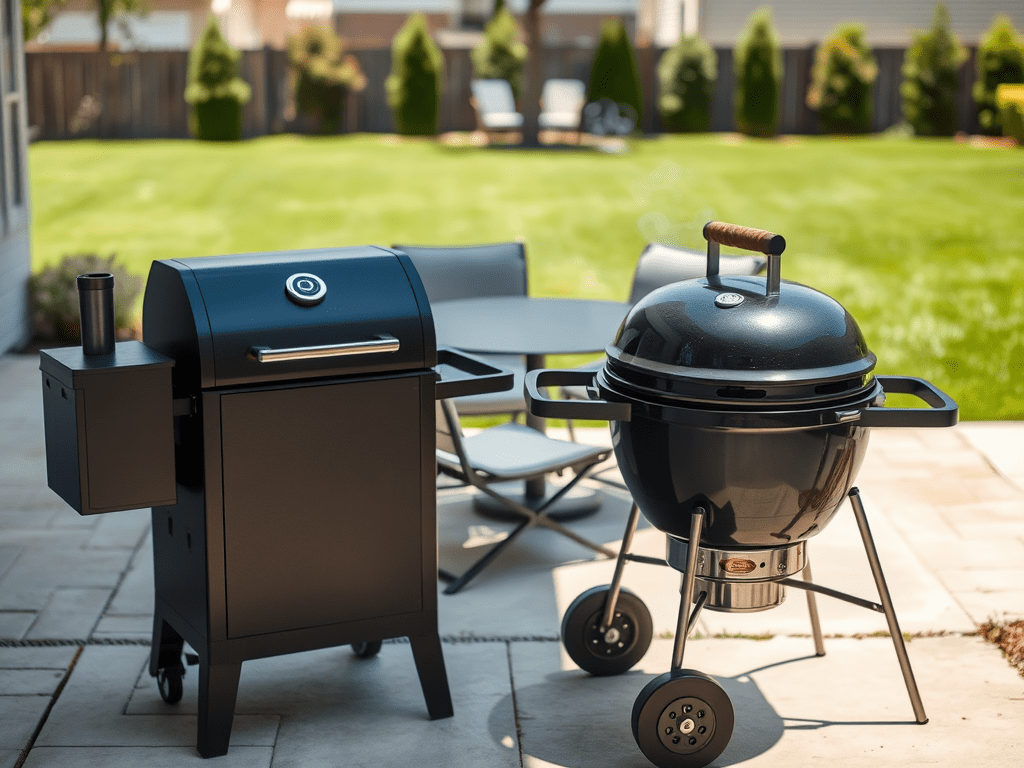
That’s where the debate between pellet grills and charcoal cooking gets a little more serious.
Pellet grills are known for consistency and ease of use, while charcoal — especially when used in smokers like an offset — has a reputation for producing a deeper, more traditional smoke flavor.
I cook on a charcoal and wood setup myself — an Oklahoma Joe Longhorn reverse flow offset smoker, better known as The Beast. So I’ve spent plenty of time managing fire, smoke, and airflow to get the kind of flavor people expect from BBQ.
If you’re trying to decide which one actually tastes better, let’s break it down based on what you’ll notice on the plate — not just how the equipment works.
What Actually Creates BBQ Flavor?
Before comparing pellet grills and charcoal, it helps to understand what actually creates that classic BBQ flavor.
It’s not just the grill or smoker itself — it’s the combination of fuel, smoke, heat, and time.
A few things play the biggest role:
- Type of fuel – wood, charcoal, or pellets all burn differently and produce different smoke profiles
- Combustion quality – clean-burning fire vs thick, dirty smoke
- Airflow – how oxygen feeds the fire and moves heat and smoke through the cooker
- Cooking temperature – lower and slower cooks allow more smoke interaction
- Time in the smoker – longer exposure builds deeper flavor
When everything is working together, you get that balanced smoke flavor people expect — not overpowering, not bitter, just enough to enhance the meat.
The difference between pellet and charcoal cooking really comes down to how each system handles these factors.
Pellet Grills: A Lighter, More Controlled Smoke Flavor
Pellet grills produce a clean, consistent smoke that’s easy to manage — and that shows up in the flavor.
Because pellets are fed into a controlled fire pot and burned efficiently, the smoke tends to be lighter and more subtle. You’re getting real wood flavor, but it’s not as intense as what you’d typically get from charcoal and wood chunks or splits.
For a lot of people, that’s actually a good thing.
Pellet grills make it easier to avoid heavy or bitter smoke, especially for beginners who are still learning how fire behaves. The result is a more balanced flavor that doesn’t overpower the meat.
From a taste perspective, that usually means:
- Milder smoke flavor – noticeable, but not dominant
- Cleaner finish – less risk of harsh or acrid taste
- Consistent results – easier to repeat from cook to cook
The trade-off is depth.
If you’re looking for that heavier, traditional BBQ flavor — the kind you get from a live fire with charcoal and wood — pellet grills can feel a little lighter by comparison.
But if you prefer a more subtle smoke profile, or you’re just starting out, pellet cooking delivers a flavor that’s approachable and reliable.
Charcoal and Offset Smoking: Deeper, Traditional BBQ Flavor
Charcoal and offset smoking produce a different kind of flavor — one that’s often described as more traditional or more “authentic” BBQ.
Instead of a controlled system feeding fuel automatically, you’re working with a live fire. Charcoal provides the heat base, and wood chunks or splits add the smoke. How that fire burns — clean or dirty, steady or fluctuating — directly affects the taste.
On an offset smoker like The Beast (an Oklahoma Joe Longhorn reverse flow), you can actually see and feel that process. The firebox, airflow, and fuel all work together, and small adjustments can change how the smoke interacts with the meat.
When everything is dialed in, the result is:
- Richer smoke flavor – deeper and more pronounced
- More bark development – especially at slightly higher temps like 250–275°F
- Distinct wood influence – depending on the type of wood you use
But there’s a catch.
That same live fire can also work against you if it’s not managed well. Thick, dirty smoke or poor airflow can lead to bitter or overpowering flavors — something beginners run into early on.
When it’s done right, though, charcoal and offset cooking produces the kind of flavor most people associate with classic barbecue.
If you’re dealing with unstable heat while cooking, here’s how to stabilize your smoker temperature
Pellet vs Charcoal: Which One Actually Tastes Better?
If you’re asking purely which one produces the strongest, most traditional BBQ flavor, charcoal and offset cooking usually comes out on top.
The combination of charcoal heat and real wood burning in a live fire creates a deeper, more pronounced smoke profile. When it’s done right, it’s the flavor most people associate with classic barbecue.
Pellet grills, on the other hand, produce a milder and more controlled smoke flavor. It’s clean, consistent, and easier to manage — but it doesn’t have quite the same intensity.
That doesn’t mean it’s worse.
For a lot of people, especially beginners, pellet cooking hits a sweet spot:
- Enough smoke to enhance the meat
- Less risk of overpowering flavor
- More consistent results from cook to cook
So the better question isn’t just “which tastes better,” but what kind of flavor you prefer.
- If you want bold, traditional BBQ flavor → charcoal and offset cooking
- If you want milder, more controlled smoke → pellet grill
Both can produce great results. One just leans heavier on smoke, while the other leans toward balance and consistency.
If you’re still trying to decide which option is easier to manage starting out, check out my breakdown of pellet grill vs charcoal for beginners.
Final Thoughts: Choosing Based on Taste and Experience
When it comes to taste, both pellet grills and charcoal setups can produce great barbecue — they just take different paths to get there.
Pellet grills offer a cleaner, more controlled smoke flavor that’s easy to manage and consistent from cook to cook. For beginners, that often means less frustration and more confidence early on.
Charcoal and offset smoking take more effort, but they give you the ability to build a deeper, more traditional BBQ flavor once you learn how to manage the fire.
If your goal is:
- Simplicity and consistency → pellet grill
- Stronger smoke flavor and hands-on control → charcoal and offset
There’s no wrong choice — just a matter of what kind of experience you want and how involved you want to be in the process.
And if you’re trying to weigh that decision alongside ease and cost, you can also check out my breakdown of pellet grill vs charcoal for beginners and what pellet vs charcoal really costs over five years to get a fuller picture.
 Smoke Tested BBQ