Author: DJ Jones

  • Easy Smoked Pulled Pork on an Offset Smoker (Beginner Friendly)

    Easy Smoked Pulled Pork on an Offset Smoker (Beginner Friendly)

    Pulled pork might be one of the most forgiving meats to learn on an offset smoker. It takes time, but unlike brisket, small mistakes usually won’t ruin the cook. If you’re learning fire management, smoke control, and patience, pork shoulder is a good place to start.

    Ingredients

    • 1 pork shoulder / Boston butt (6–9 lbs works well)
    • Yellow mustard (binder, optional)
    • BBQ rub of choice
    • Apple juice or apple cider vinegar (spritz, optional)
    • Aluminum foil or butcher paper
    • BBQ sauce (optional for serving)

    Smoker Setup

    For pulled pork on The Beast, I usually run between 250°F and 275°F. Purists love 225°F, but I’d rather finish before tomorrow and still get good bark.

    Fuel setup:

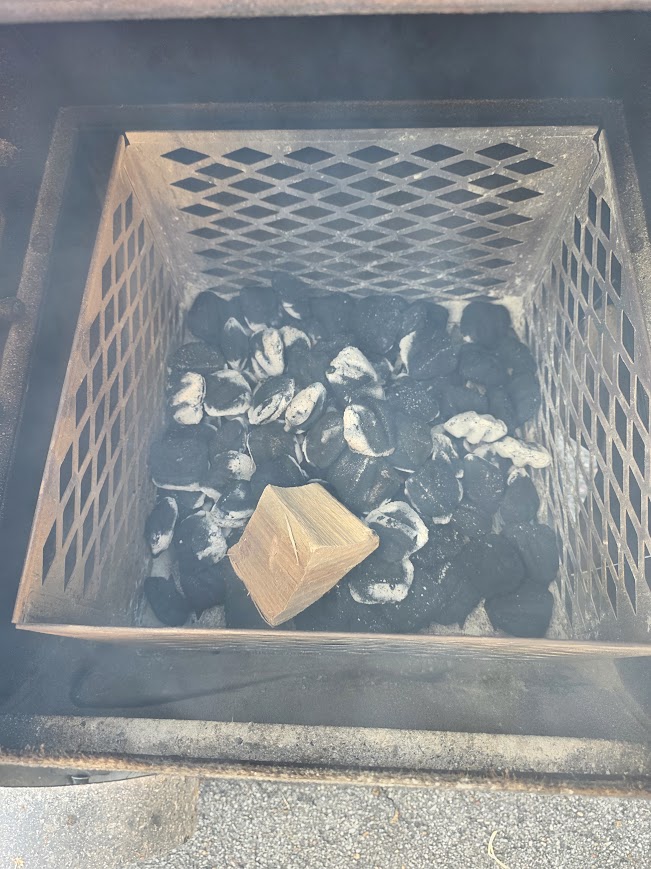
    • Charcoal base (lump or briquettes both work)
    • Wood splits preferred for steadier heat
    • Pecan or hickory for smoke flavor

    I’ll occasionally spritz with water or apple cider vinegar if the bark starts looking dry.

    One thing beginners learn quickly:

    Temperature matters more than time.

    This is where a digital thermometer earns its money.

    The rest of the cook is simple:

    Season → Smoke → Wrap → Rest → Pull

    Pulled pork rewards patience more than perfection.

    Step 1: Prep the Pork Shoulder

    Pat the pork shoulder dry if needed.

    Lightly coat the outside with yellow mustard. The mustard acts as a binder and helps seasoning stick. Don’t worry — you won’t taste much mustard after a long cook.

    Apply your BBQ rub generously on all sides.

    I used to mix my own sweeter rub with a brown sugar base, but these days there are enough good commercial rubs around that I’ll rotate and try different ones.

    A few BBQ rubs I’ve liked for pulled pork:

    Meat Church Holy Gospel → slightly sweet with enough savory flavor to work well on pork

    Heath Riles Sweet BBQ Rub → balanced and versatile; good bark development

    Killer Hogs The BBQ Rub → one of my go-to options when I want a sweeter profile on pork

    One benefit of pork shoulder:

    It’s forgiving.

    You don’t have to overthink seasoning nearly as much as brisket.

    Let the pork sit while the smoker comes to temperature.

    Step 2: Smoke the Pork Shoulder

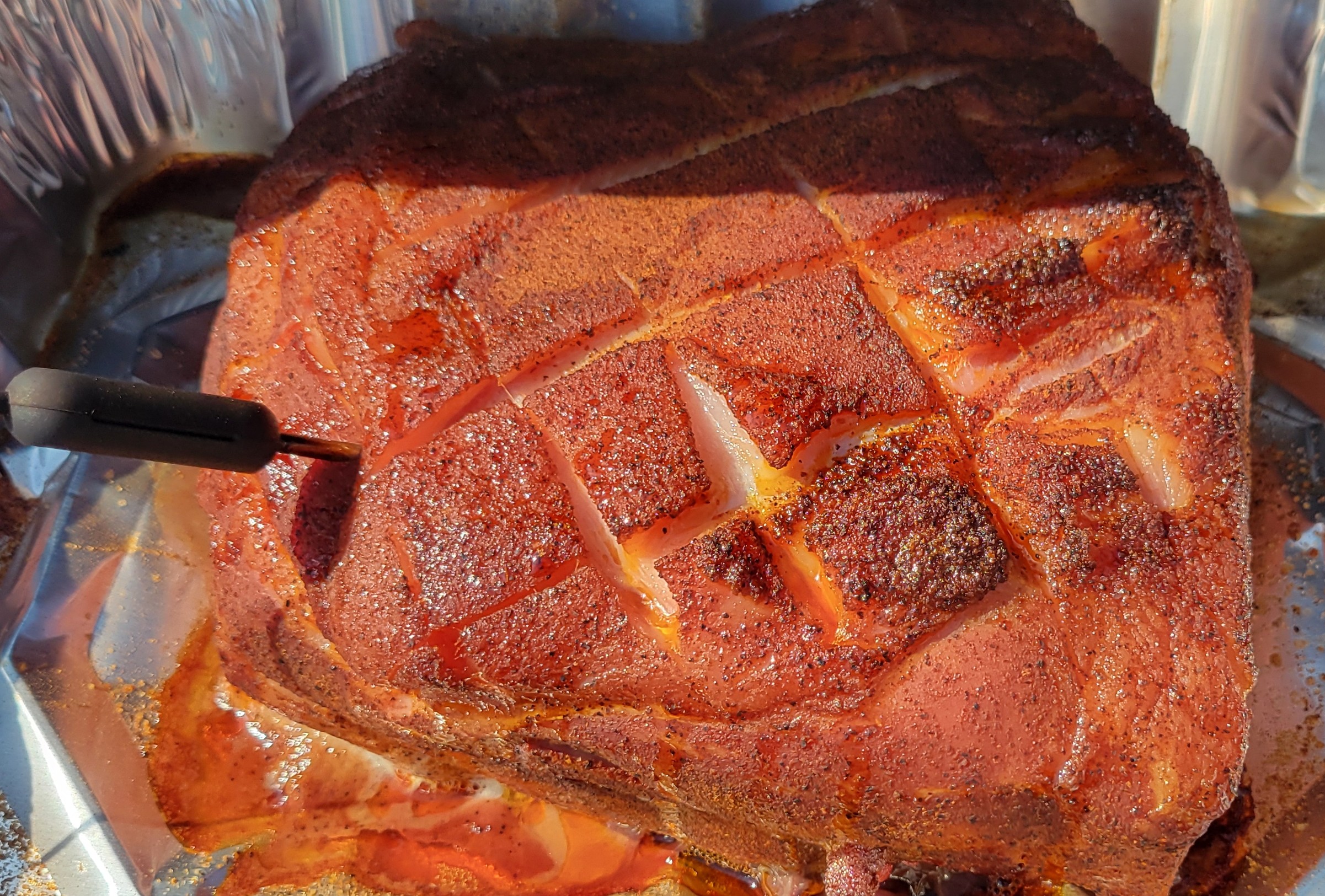
    Place the pork shoulder on the smoker with the fat cap facing up.

    I’ll usually score the fat cap in a diamond pattern beforehand. Some people swear it helps smoke and seasoning work deeper into the bark, and at minimum it helps create more surface area.

    Cook around:

    250°F–275°F

    Expect roughly:

    45 minutes to 1 hour per pound

    A typical 7–8 lb shoulder can easily turn into an all-day cook.

    A few things I watch during the cook:

    • Smoke quality (thin smoke beats heavy white smoke)
    • Bark development
    • Moisture on the outside of the pork
    • Hot spots in the smoker

    On an offset, one side sometimes cooks differently than another.

    If I think part of the pork is drying out faster, I’ll occasionally rotate the shoulder.

    I may spritz with water or apple cider vinegar if the bark starts looking dry.

    At around:

    167°F–175°F internal temperature

    Wrap tightly in foil to push through the stall and help retain moisture.

    Step 3: Rest, Pull, and Finish

    Once the pork shoulder reaches around 203°F internal temperature, pull it from the smoker and let it rest for about an hour.

    Skipping the rest is one of the easiest mistakes beginners make.

    The juices need time to redistribute.

    After resting:

    • Shred or pull the pork
    • Mix bark pieces throughout for texture and flavor
    • Add a small amount of reserved juice back in (not all of it)
    • Sprinkle in a touch more BBQ rub if needed

    The goal isn’t wet pulled pork.

    The goal is moist pork that still tastes like smoke and bark.

    One thing I usually avoid:

    Adding sauce immediately.

    I’d rather let people sauce their own so the smoked pork flavor still comes through.

    Common Pulled Pork Mistakes Beginners Make

    ❌ Pulling the pork too early
    203°F matters more than impatience. Need a reference? Check out my guide on target temperatures for pork, chicken, and brisket.

    ❌ Not using a digital thermometer
    Guessing costs more cooks than seasoning mistakes.

    ❌ Skipping the rest period
    Hot pork isn’t ready pork.

    ❌ Chasing smoker temperatures every 10 minutes
    Offset cooking rewards patience.

    Final Thoughts

    Pulled pork is one of the best meats to learn on an offset smoker.

    It teaches:

    • Fire management
    • Patience
    • Smoke control
    • Temperature monitoring

    …and unlike brisket, small mistakes usually won’t ruin the cook.

    One thing I like about pulled pork:

    The leftovers rarely go to waste.

    It works on:

    • BBQ baked potatoes
    • Sandwiches
    • Nachos

    I’ll also vacuum seal or freeze portions in zip bags, and it reheats surprisingly well later.

    A long cook turns into several meals.

    That’s hard to beat.

  • Easy Smoked Chicken Thighs on an Offset Smoker (Beginner Friendly)

    Easy Smoked Chicken Thighs on an Offset Smoker (Beginner Friendly)

    Chicken thighs might be one of the best things to learn on an offset smoker. They’re forgiving, cheaper than brisket, and still give you that smoky flavor that makes people think you know what you’re doing.

    Why Chicken Thighs?

    If you’re learning fire management on an offset smoker, chicken thighs give you room for mistakes. Temperature swings that would wreck a brisket? Chicken thighs usually survive just fine.

    I’ve cooked plenty of things where chasing temperatures became the whole cook. Chicken thighs are easier.


    Ingredients

    • 8 bone-in, skin-on chicken thighs
    • 2 tbsp olive oil
    • 2 tbsp BBQ rub (your favorite)
    • 1 tsp garlic powder
    • 1 tsp paprika
    • 1/2 tsp black pepper
    • Optional: light dusting of brown sugar for color

    Smoker Setup

    For this cook I’d run:

    • Smoker temp: 250°F–275°F
    • Wood: Oak, hickory, pecan, or fruit wood
    • Target internal temp: 175°F–185°F

    Yes, thighs are different than chicken breast. Going higher breaks down connective tissue and actually improves texture.


    Step 1: Prep the Chicken

    Pat thighs dry.

    Lightly coat with olive oil.

    Apply seasoning generously, especially under the skin edges if possible.

    Let rest while smoker heats.


    Step 2: Get Clean Smoke

    One mistake beginners make:

    Too much dirty white smoke.

    You want thinner blue-ish smoke if possible.

    Heavy white smoke can leave bitter flavor.

    (If your smoker temperatures swing a lot, check out my article on managing offset smoker temps.)


    Step 3: Smoke

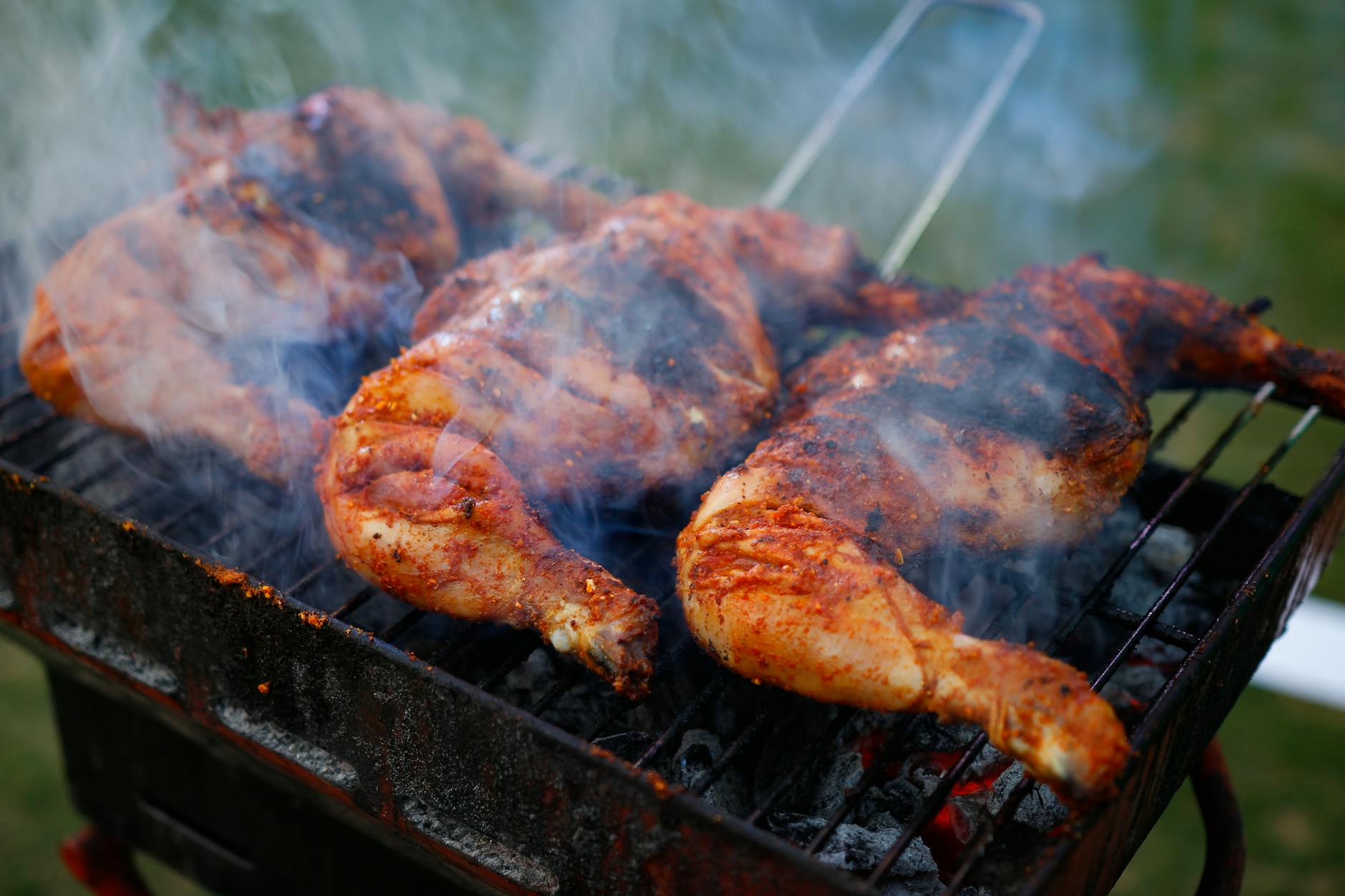
    Place thighs skin side up.

    Cook approximately:

    60–90 minutes

    Time varies more by smoker temp than people realize.

    At around 160°F internal temp:

    Optional:
    Brush lightly with BBQ sauce.


    Step 4: Finish

    Pull thighs around:

    175–185°F internal

    Need a quick reference? Check out my guide on Target Temps for Chicken, Pork, and Brisket (No Guessing, No Panic).

    Skin should look darker and slightly crisp.

    Rest 5–10 minutes.


    What Went Right / What Went Wrong

    Good signs:

    ✔ Bite-through skin
    ✔ Juicy meat
    ✔ Mild smoke flavor

    Problems:

    Rubbery skin?
    Smoker temp likely too low.

    Bitter taste?
    Too much dirty smoke.

    Dry meat?
    Cooked too long above target temp.


    Final Thoughts

    Chicken thighs don’t get talked about like brisket or ribs, but they might be the best practice cook for learning an offset smoker. Cheaper, forgiving, and hard to mess up.

  • Best Charcoal for Offset Smokers (What I Use on The Beast)

    Best Charcoal for Offset Smokers (What I Use on The Beast)

    One of the biggest things that affects how an offset smoker runs is the charcoal you use.

    Some charcoal burns hot and clean. Some burns inconsistently, produces too much ash, or dies out faster than you expect. And when you’re trying to manage temperature on an offset smoker, those differences matter.

    I cook on an Oklahoma Joe Longhorn reverse flow offset smoker — better known around here as The Beast — and over time I’ve learned pretty quickly that not all charcoal performs the same.

    A good charcoal setup helps with:

    • Temperature stability
    • Fire management
    • Smoke quality
    • Burn time
    • Overall consistency during long cooks

    If you’re cooking on an offset smoker and trying to figure out what charcoal actually works best, here’s what I’ve found from real cooks on The Beast.

    What Makes a Good Charcoal for an Offset Smoker?

    Offset smokers demand more from charcoal than a standard grill.

    You’re not just trying to light a fire — you’re trying to maintain a steady, controlled burn over several hours while managing airflow and temperature at the same time.

    A good charcoal for an offset smoker should do a few things well:

    • Burn consistently – steady heat matters more than short bursts of high temperature
    • Produce less ash – excess ash can restrict airflow and affect the fire
    • Light cleanly – cleaner combustion helps avoid harsh smoke flavor
    • Hold heat well – especially during longer cooks like pork shoulder or brisket
    • Work well with wood chunks or splits – since many offset cooks combine charcoal and wood

    On The Beast, consistency matters more to me than chasing the absolute hottest burn possible. A steady fire is easier to control, easier to recover, and makes the entire cook smoother.

    That’s why the type of charcoal you use can make a bigger difference than people realize.

    And if your readings seem inconsistent during cooks, the issue may actually be that your smoker temperature doesn’t match the lid gauge.

    Lump Charcoal vs Briquettes for Offset Smokers

    When it comes to offset smokers, most people end up choosing between lump charcoal and briquettes.

    Both can work well — they just behave differently.


    Lump Charcoal

    Lump charcoal is made from real hardwood that’s been burned down into charcoal without being compressed into uniform shapes.

    What I like about lump charcoal on an offset smoker:

    • Burns hotter
    • Lights quickly
    • Produces less ash
    • Gives a more natural wood-fire feel

    The downside is consistency. Because the pieces vary in size, lump charcoal can burn unevenly at times and may require a little more attention during longer cooks.


    Briquettes

    Briquettes are compressed charcoal pieces designed to burn in a more uniform way.

    Advantages of briquettes:

    • More predictable burn
    • Easier temperature consistency
    • Longer steady burn times
    • Often easier for beginners to manage

    The trade-off is that briquettes usually produce more ash and don’t always burn as cleanly as good lump charcoal.


    What I Prefer on The Beast

    For my setup, I usually prefer a charcoal base that burns steadily and works well alongside wood chunks or splits.

    Consistency matters more to me than chasing maximum heat, especially when cooking in that 250–275°F range.

    That’s where a reliable charcoal setup really helps stabilize the cook.

    The Charcoal I’ve Had the Best Results With

    After a lot of cooks on The Beast, I’ve found that consistency matters more than chasing the “perfect” charcoal.

    What works best for me is a charcoal that:

    • Lights reliably
    • Holds steady temperatures
    • Doesn’t overload the firebox with ash
    • Recovers well after adding wood splits or opening the smoker

    For longer cooks, I tend to prefer charcoal that gives me a predictable burn and helps keep the smoker in that stable 250–275°F range without constant adjustments.

    A few brands have worked well for me over time:

    Kingsford Professional – steady and easy to manage

    Jealous Devil Lump Charcoal – hotter burn with less ash

    B&B Charcoal – good balance between burn time and heat consistency

    Different smokers react differently, but all three have given me solid results on an offset setup.

    The biggest thing is finding a charcoal that works consistently with your smoker and your cooking style — because once you learn how your fire behaves, managing temperature becomes a whole lot easier.

    Tips for Managing Charcoal on an Offset Smoker

    Even the best charcoal won’t help much if the fire isn’t managed properly.

    A few small habits can make a big difference when cooking on an offset smoker:


    Start with a Clean Fire

    A clean-burning fire produces better heat and cleaner smoke flavor.

    Avoid smothering the fire with too much fuel at once, and give new charcoal time to catch properly before making major adjustments.


    Add Fuel Gradually

    Large fuel dumps usually create temperature spikes.

    Smaller, more controlled additions help maintain a steadier cooking range.


    Watch Your Airflow

    Good airflow keeps charcoal burning efficiently.

    On an offset smoker, the intake vent controls how much oxygen reaches the fire, while the exhaust helps move heat and smoke through the cooker.

    Small adjustments usually work better than aggressive changes.


    Don’t Chase Every Temperature Change

    Minor swings are normal.

    Trying to constantly correct every small movement usually makes the problem worse.

    Staying within a reasonable range matters more than holding one exact number.


    Learn Your Smoker’s Rhythm

    Every offset smoker behaves a little differently.

    The more time you spend cooking on it, the easier it becomes to predict how your fire will respond when adding fuel, adjusting airflow, or changing weather conditions.

    That’s where confidence starts to build.

    If your temperatures are constantly moving around, it also helps to understand how to stabilize your smoker temperature.

    Final Thoughts: The Best Charcoal Is the One You Can Control Consistently

    There’s no single “perfect” charcoal for every offset smoker.

    What matters most is finding a fuel that burns consistently, works well with your setup, and helps you maintain control of the fire over long cooks.

    Some people prefer hotter-burning lump charcoal. Others like the predictability of briquettes. Both can produce great barbecue once you learn how your smoker responds.

    On The Beast, consistency has always mattered more to me than chasing extreme heat or constantly changing fuel types. A steady fire, controlled airflow, and manageable temperature range make the entire cook easier and more enjoyable.

    At the end of the day, the best charcoal is the one that helps you cook confidently and keeps your smoker running the way you want it to.

    And once you find that rhythm, everything else starts getting easier.

    As an Amazon Associate, I earn from qualifying purchases.

  • Why Your Smoker Temperature Keeps Fluctuating (And How to Fix It)

    Why Your Smoker Temperature Keeps Fluctuating (And How to Fix It)

    If you’ve spent any time cooking on a smoker, you’ve probably noticed one thing pretty quickly:

    The temperature doesn’t stay perfectly steady.

    One minute you’re sitting at 250°F, and the next you’re watching it climb or drop without really knowing why. For beginners especially, that can feel like something is going wrong.

    The truth is, some temperature fluctuation is completely normal — especially on charcoal and offset smokers.

    I cook on an Oklahoma Joe Longhorn reverse flow offset smoker (The Beast), and learning how to manage temperature swings was one of the first real challenges. It’s not about eliminating every fluctuation — it’s about understanding what’s causing it and how to keep things under control.

    If your smoker temperature keeps moving around, here’s what’s actually happening — and how to fix it.

    What Causes Temperature Swings in a Smoker?

    Temperature swings don’t happen randomly — they’re almost always tied to how your fire and airflow are behaving.

    On most smokers, especially charcoal and offset setups, heat isn’t controlled by a dial. It’s controlled by how fuel burns and how air moves through the cooker.

    A few common factors cause temperatures to rise and fall:

    • Fuel changes – adding charcoal or wood increases heat, while burning fuel down lowers it
    • Airflow adjustments – opening or closing vents changes how much oxygen feeds the fire
    • Fire quality – a clean, steady burn vs a struggling or uneven fire
    • Lid openings – every time you open the smoker, you lose heat and disrupt airflow
    • Weather conditions – wind and outside temperature can affect how your smoker holds heat

    All of these variables are constantly interacting, which is why temperatures move instead of staying perfectly flat.

    The key isn’t stopping every fluctuation — it’s learning how to manage these factors so the swings stay small and controlled.

    If you’re just getting started, it also helps to understand pellet grill vs charcoal for beginners.

    How Much Temperature Fluctuation Is Normal?

    One of the biggest misconceptions in BBQ is that your smoker temperature needs to stay perfectly steady.

    It doesn’t.

    In fact, small temperature swings are completely normal — especially on charcoal and offset smokers.

    A good rule of thumb:

    • ±10–15°F → very normal
    • ±20–25°F → still manageable
    • Large or constant swings → something needs attention

    On a live-fire setup like an offset smoker, you’re dealing with burning fuel, airflow, and heat movement all at once. That naturally creates some variation.

    On The Beast, I’m usually aiming to stay in a range rather than lock into one exact number. If I’m cooking in the 250–275°F zone, I’m not worried if it moves around within that window.

    The goal isn’t perfection — it’s consistency over time.

    As long as your smoker is staying within a reasonable range, those small fluctuations won’t hurt your cook.

    Common Reasons Your Smoker Temperature Keeps Fluctuating

    If your smoker temperature is swinging more than it should, there’s usually a specific reason behind it.

    Here are the most common causes:


    1. Adding Too Much Fuel at Once

    Dumping in a large amount of charcoal or throwing on multiple wood splits can spike your temperature quickly.

    Smaller, controlled additions help keep your heat steady.


    2. Poor Airflow Control

    Airflow is everything when it comes to fire.

    • Too much air → fire burns hotter and faster
    • Too little air → fire struggles and temperature drops

    Making small adjustments to your vents instead of big changes helps stabilize things.


    3. Inconsistent Fire Management

    Letting your fire burn down too far and then trying to bring it back up quickly leads to big swings.

    A steady fire requires steady attention — not constant adjustment, but consistent awareness.


    4. Opening the Lid Too Often

    Every time you open the smoker, heat escapes and airflow changes.

    That leads to temperature drops followed by spikes as the fire reacts.


    5. Weather and Wind

    Wind can push air into your firebox or pull heat out of your smoker.

    Cold weather can also make it harder to maintain steady temps.

    Even small environmental changes can have a noticeable impact.


    6. Poor Fuel Quality

    Low-quality charcoal or damp wood doesn’t burn cleanly or consistently.

    That leads to uneven heat and more fluctuation.


    Most of the time, it’s not just one of these — it’s a combination.

    The good news is, once you recognize what’s causing the swings, it becomes much easier to fix.

    How to Stabilize Your Smoker Temperature

    Once you understand what’s causing temperature swings, keeping things steady becomes a lot more manageable.

    Here are a few practical ways to stabilize your smoker:


    1. Make Small, Gradual Adjustments

    Whether you’re adjusting vents or adding fuel, small changes go a long way.

    Big adjustments tend to overcorrect and create larger swings. Give each change time to take effect before making another.


    2. Maintain a Steady Fire

    Don’t let your fire burn down too far before adding more fuel.

    Adding smaller amounts of charcoal or wood consistently helps keep your temperature stable instead of constantly chasing it.


    3. Control Your Airflow

    Use your intake vent as your primary control.

    • Open slightly to increase heat
    • Close slightly to reduce it

    Avoid constantly adjusting both intake and exhaust — that usually leads to more fluctuation.


    4. Limit How Often You Open the Smoker

    Every time you open the lid, you’re resetting the system.

    Try to trust your process and only check when necessary.


    5. Use a Reliable Thermometer

    Built-in gauges can be off.

    Using a digital thermometer gives you a more accurate reading and helps you make better adjustments.

    If your readings seem off, it could also be an issue with your thermometer—here’s why your smoker temperature doesn’t match the lid gauge.


    6. Protect Your Smoker from Wind

    If possible, position your smoker where it’s shielded from wind.

    Even a small barrier can make a noticeable difference in temperature stability.


    Stabilizing your smoker isn’t about eliminating every fluctuation — it’s about keeping things within a controlled range and letting the cook run smoothly.

    And if you’re comparing setups overall, I also broke down what pellet vs charcoal really costs over five years.

    Final Thoughts: Don’t Chase Perfect Temperature

    If there’s one thing to keep in mind, it’s this:

    You don’t need perfect temperature to cook great BBQ.

    Small fluctuations are part of the process, especially when you’re working with charcoal or an offset smoker. Trying to lock your smoker into one exact number usually leads to over-adjusting and bigger swings.

    It’s better to focus on staying within a consistent range and letting the cook develop over time.

    On The Beast, I’m not chasing a perfect 250°F — I’m watching how the fire behaves and keeping things in that 250–275°F zone. As long as it stays in that window, the results are there.

    The more time you spend with your smoker, the more natural this becomes.

    And once it clicks, those temperature swings stop feeling like a problem — and start feeling like part of the process.

  • Pellet vs Charcoal: Which One Tastes Better?

    Pellet vs Charcoal: Which One Tastes Better?

    When it comes to BBQ, taste is what really matters.

    You can talk about ease, cost, and convenience all day, but at the end of it, you’re trying to put something on the table that actually tastes like real barbecue.

    That’s where the debate between pellet grills and charcoal cooking gets a little more serious.

    Pellet grills are known for consistency and ease of use, while charcoal — especially when used in smokers like an offset — has a reputation for producing a deeper, more traditional smoke flavor.

    I cook on a charcoal and wood setup myself — an Oklahoma Joe Longhorn reverse flow offset smoker, better known as The Beast. So I’ve spent plenty of time managing fire, smoke, and airflow to get the kind of flavor people expect from BBQ.

    If you’re trying to decide which one actually tastes better, let’s break it down based on what you’ll notice on the plate — not just how the equipment works.

    What Actually Creates BBQ Flavor?

    Before comparing pellet grills and charcoal, it helps to understand what actually creates that classic BBQ flavor.

    It’s not just the grill or smoker itself — it’s the combination of fuel, smoke, heat, and time.

    A few things play the biggest role:

    • Type of fuel – wood, charcoal, or pellets all burn differently and produce different smoke profiles
    • Combustion quality – clean-burning fire vs thick, dirty smoke
    • Airflow – how oxygen feeds the fire and moves heat and smoke through the cooker
    • Cooking temperature – lower and slower cooks allow more smoke interaction
    • Time in the smoker – longer exposure builds deeper flavor

    When everything is working together, you get that balanced smoke flavor people expect — not overpowering, not bitter, just enough to enhance the meat.

    The difference between pellet and charcoal cooking really comes down to how each system handles these factors.

    Pellet Grills: A Lighter, More Controlled Smoke Flavor

    Pellet grills produce a clean, consistent smoke that’s easy to manage — and that shows up in the flavor.

    Because pellets are fed into a controlled fire pot and burned efficiently, the smoke tends to be lighter and more subtle. You’re getting real wood flavor, but it’s not as intense as what you’d typically get from charcoal and wood chunks or splits.

    For a lot of people, that’s actually a good thing.

    Pellet grills make it easier to avoid heavy or bitter smoke, especially for beginners who are still learning how fire behaves. The result is a more balanced flavor that doesn’t overpower the meat.

    From a taste perspective, that usually means:

    • Milder smoke flavor – noticeable, but not dominant
    • Cleaner finish – less risk of harsh or acrid taste
    • Consistent results – easier to repeat from cook to cook

    The trade-off is depth.

    If you’re looking for that heavier, traditional BBQ flavor — the kind you get from a live fire with charcoal and wood — pellet grills can feel a little lighter by comparison.

    But if you prefer a more subtle smoke profile, or you’re just starting out, pellet cooking delivers a flavor that’s approachable and reliable.

    Charcoal and Offset Smoking: Deeper, Traditional BBQ Flavor

    Charcoal and offset smoking produce a different kind of flavor — one that’s often described as more traditional or more “authentic” BBQ.

    Instead of a controlled system feeding fuel automatically, you’re working with a live fire. Charcoal provides the heat base, and wood chunks or splits add the smoke. How that fire burns — clean or dirty, steady or fluctuating — directly affects the taste.

    On an offset smoker like The Beast (an Oklahoma Joe Longhorn reverse flow), you can actually see and feel that process. The firebox, airflow, and fuel all work together, and small adjustments can change how the smoke interacts with the meat.

    When everything is dialed in, the result is:

    • Richer smoke flavor – deeper and more pronounced
    • More bark development – especially at slightly higher temps like 250–275°F
    • Distinct wood influence – depending on the type of wood you use

    But there’s a catch.

    That same live fire can also work against you if it’s not managed well. Thick, dirty smoke or poor airflow can lead to bitter or overpowering flavors — something beginners run into early on.

    When it’s done right, though, charcoal and offset cooking produces the kind of flavor most people associate with classic barbecue.

    If you’re dealing with unstable heat while cooking, here’s how to stabilize your smoker temperature

    Pellet vs Charcoal: Which One Actually Tastes Better?

    If you’re asking purely which one produces the strongest, most traditional BBQ flavor, charcoal and offset cooking usually comes out on top.

    The combination of charcoal heat and real wood burning in a live fire creates a deeper, more pronounced smoke profile. When it’s done right, it’s the flavor most people associate with classic barbecue.

    Pellet grills, on the other hand, produce a milder and more controlled smoke flavor. It’s clean, consistent, and easier to manage — but it doesn’t have quite the same intensity.

    That doesn’t mean it’s worse.

    For a lot of people, especially beginners, pellet cooking hits a sweet spot:

    • Enough smoke to enhance the meat
    • Less risk of overpowering flavor
    • More consistent results from cook to cook

    So the better question isn’t just “which tastes better,” but what kind of flavor you prefer.

    • If you want bold, traditional BBQ flavor → charcoal and offset cooking
    • If you want milder, more controlled smoke → pellet grill

    Both can produce great results. One just leans heavier on smoke, while the other leans toward balance and consistency.

    If you’re still trying to decide which option is easier to manage starting out, check out my breakdown of pellet grill vs charcoal for beginners.

    Final Thoughts: Choosing Based on Taste and Experience

    When it comes to taste, both pellet grills and charcoal setups can produce great barbecue — they just take different paths to get there.

    Pellet grills offer a cleaner, more controlled smoke flavor that’s easy to manage and consistent from cook to cook. For beginners, that often means less frustration and more confidence early on.

    Charcoal and offset smoking take more effort, but they give you the ability to build a deeper, more traditional BBQ flavor once you learn how to manage the fire.

    If your goal is:

    • Simplicity and consistency → pellet grill
    • Stronger smoke flavor and hands-on control → charcoal and offset

    There’s no wrong choice — just a matter of what kind of experience you want and how involved you want to be in the process.

    And if you’re trying to weigh that decision alongside ease and cost, you can also check out my breakdown of pellet grill vs charcoal for beginners and what pellet vs charcoal really costs over five years to get a fuller picture.

  • Pellet Grill vs Charcoal: Which Is Easier for Beginners?

    Pellet Grill vs Charcoal: Which Is Easier for Beginners?

    If you’re getting into BBQ, one of the first questions you’ll run into is simple:

    Should I go with a pellet grill or stick with charcoal?

    On paper, pellet grills look easy. Set the temperature, walk away, and let the machine do the work. Charcoal, on the other hand, has a reputation for being more hands-on — more control, but also more effort.

    I’ve spent my time cooking on a traditional offset smoker — an Oklahoma Joe Longhorn reverse flow (around here, we call it The Beast). That means I’ve lived on the charcoal and wood side of things, dealing with fire management, airflow, and temperature swings.

    So if you’re a beginner trying to decide which route is easier, let’s break it down in real-world terms — not just what the manuals say, but what it actually feels like when you’re out there cooking.

    What Makes a Grill Easy for Beginners?

    Before choosing between pellet and charcoal, it helps to define what “easy” actually means when it comes to BBQ.

    For most beginners, ease comes down to a few key things:

    • Startup time – how quickly you can get cooking
    • Temperature control – how easy it is to hold a steady heat
    • Fire management – how much attention the grill needs
    • Learning curve – how long it takes to feel comfortable
    • Consistency – whether you get repeatable results

    Some people don’t mind tending a fire and learning the process. Others just want to put meat on, set a temperature, and not worry about it.

    Neither approach is wrong — but they are very different experiences.

    Understanding what matters most to you will make the decision a whole lot easier.

    Pellet Grills: The Easiest Entry Point?

    Pellet grills are often marketed as the easiest way to get into BBQ — and for a lot of beginners, that’s true.

    Most pellet grills work like an outdoor oven. You set your temperature, and the grill feeds wood pellets into a fire pot automatically to maintain that heat. A fan controls airflow, and the system does the work for you.

    From a beginner standpoint, that means:

    • Quick startup – turn it on and set your temp
    • Minimal fire management – no adjusting vents or adding fuel constantly
    • Stable temperatures – the grill handles fluctuations for you
    • Repeatable results – once you learn it, you can get consistent cooks

    If your goal is to keep things simple and avoid the frustration of managing a fire, pellet grills are about as close as it gets to “set it and forget it.”

    That said, the trade-off is control. You’re relying on the grill’s system rather than learning how fire behaves, and some people feel that takes away from the experience.

    But if ease is your top priority as a beginner, pellet grills are hard to beat.

    Charcoal Grills and Offset Smokers: A Steeper Learning Curve

    Charcoal grills and offset smokers are a different experience entirely.

    Instead of setting a temperature and letting the grill handle it, you are the system. You control the heat by managing fuel, airflow, and fire size — and that takes some practice.

    I cook on an Oklahoma Joe Longhorn reverse flow offset smoker — around here, it’s called The Beast. And I can tell you firsthand, charcoal and wood-fired cooking isn’t something you just turn on and walk away from.

    For beginners, that usually means:

    • Longer startup time – getting a clean, stable fire takes effort
    • Active fire management – adding charcoal or wood and adjusting airflow
    • Temperature swings – especially early on while you’re learning
    • Hands-on cooking – you’re checking and adjusting throughout the cook

    But there’s a flip side.

    Once you start to understand how your fire behaves — how airflow affects temperature, how fuel burns, how the smoker reacts — it starts to click. And when it does, you gain a level of control that pellet grills don’t really offer.

    For some people, that learning curve is frustrating. For others, it’s the whole point of BBQ.

    It’s not the easiest path for a beginner — but it’s one that teaches you the fundamentals quickly.

    Pellet vs Charcoal: Which Is Actually Easier for Beginners?

    If you’re looking strictly at ease, pellet grills are the clear winner for most beginners.

    They remove a lot of the variables that make BBQ challenging early on. You don’t have to manage a fire, adjust airflow, or constantly monitor temperatures. You set it, let it run, and focus on the food.

    Charcoal and offset cooking, on the other hand, requires more attention and patience. There’s a learning curve, and your first few cooks may not go exactly as planned while you figure things out.

    But “easier” doesn’t always mean “better,” depending on what you want out of BBQ.

    If your goal is:

    • Convenience and consistency → pellet grill is the easier choice
    • Learning fire control and traditional BBQ skills → charcoal is the better teacher

    A lot of beginners start with pellet grills to build confidence, then move into charcoal or offset cooking later once they want more control.

    Others jump straight into charcoal, accept the learning curve, and never look back.

    There’s no wrong choice — just a different path depending on how hands-on you want to be.

    My Take: Cooking at 250–275°F on an Offset Smoker

    For me, I’ve settled into cooking most things in the 250–275°F range on an offset smoker.

    That’s where I’ve found the balance.

    Running a little hotter than the traditional 225°F makes the cook more manageable. The fire stays cleaner, the smoker responds better, and you’re not chasing temperatures all day trying to keep things perfect.

    On The Beast — my Oklahoma Joe Longhorn reverse flow — that range also helps keep the cook steady without constantly fighting the fire. It still takes attention, but it’s a rhythm you can get into once you’ve spent some time with it.

    Is it as easy as a pellet grill? No.

    But it’s also not as intimidating as it seems once you understand what your smoker is doing. And when everything comes together — the fire, the airflow, the bark forming just right — it’s a different kind of satisfaction.

    For beginners, this is where charcoal and offset cooking starts to make sense. It’s not about perfection — it’s about learning how to manage the process.

    Final Thoughts: Pellet Grill vs Charcoal for Beginners

    If you’re just getting started and want the easiest path into BBQ, a pellet grill is hard to beat.

    It’s simple, consistent, and removes a lot of the early frustration that can come with learning how to manage a fire. For a lot of beginners, that’s exactly what they need to build confidence and start enjoying the process.

    But if you’re willing to put in a little more time and effort, charcoal — especially on an offset smoker — teaches you how BBQ really works. You’ll learn fire control, airflow, and how your smoker responds, and those skills carry over no matter what you cook on later.

    At the end of the day, the “easier” option depends on what you want:

    • If you want convenience and simplicity, go pellet
    • If you want hands-on cooking and traditional BBQ skills, go charcoal

    Either way, you’re still cooking barbecue — and that’s the part that really matters.

    If cost matters as much as ease, I also broke down what pellet vs charcoal really costs over five years.

    And if you end up running an offset smoker like The Beast, just know — it may not be the easiest way to start, but it’s one you won’t forget.

  • Pellet Smoker vs Charcoal: Which is Easier for Beginners?

    Pellet Smoker vs Charcoal: Which is Easier for Beginners?

    If you’re thinking about buying your first smoker, one of the first decisions you’ll run into is pellet vs charcoal. Both can produce great barbecue, but the experience of cooking on them is very different.

    For beginners, the biggest difference usually comes down to how much hands-on control you want versus how much automation you prefer. Understanding that difference can make choosing your first smoker much easier.

    How Pellet Smokers Work

    Pellet smokers run on compressed wood pellets that feed into a small fire pot automatically. A digital controller regulates the temperature by controlling how many pellets are delivered and how much air reaches the fire.

    For beginners, this means you can usually set a cooking temperature and let the smoker maintain it with minimal adjustment. The process feels similar to using an outdoor oven.

    Because the temperature control is automated, pellet smokers tend to have a shorter learning curve for new backyard cooks.

    How Charcoal Smokers Work

    Charcoal smokers rely on burning charcoal for heat and wood chunks for smoke flavor. Instead of an automatic controller, temperature is managed by adjusting airflow through the smoker’s vents.

    Opening vents allows more oxygen into the fire, which raises the temperature. Closing them restricts airflow and lowers the heat.

    Many experienced pitmasters enjoy this hands-on approach, but it usually requires more attention and practice compared to pellet smokers.

    Which One Is Easier for Beginners?

    For most beginners, pellet smokers are easier to learn. The automated temperature control removes much of the trial and error that comes with managing a charcoal fire.

    Instead of adjusting vents and monitoring fuel constantly, you can focus more on the food itself. That simplicity is why many first-time backyard cooks choose pellet smokers.

    Charcoal smokers can absolutely produce incredible barbecue, but they usually require more time to learn how airflow, fuel placement, and temperature control interact.

    When Charcoal Might Still Be the Better Choice

    Ease of use isn’t the only factor when choosing a smoker. Some beginners enjoy learning the hands-on process of managing a charcoal fire.

    Charcoal smokers are also mechanically simple and often cost less upfront. Many backyard cooks appreciate the control they get from adjusting airflow and fuel manually.

    If you enjoy experimenting and learning the craft of fire management, charcoal can still be a great place to start.

    Final Thoughts for First-Time Smokers

    For beginners, pellet smokers usually offer the easiest starting point because they simplify temperature control and reduce the learning curve. Charcoal smokers require more hands-on management but can be very rewarding for people who enjoy learning how fire behaves.

    Both types of smokers can produce excellent barbecue. The best choice often comes down to whether you want convenience or a more traditional fire-management experience.

    If you’re still deciding between the two, it helps to look at other factors like long-term cost and overall cooking style.

  • Pellet Smoker vs Charcoal: What It Really Costs Over 5 Years

    Pellet Smoker vs Charcoal: What It Really Costs Over 5 Years

    When people compare pellet smokers and charcoal smokers, they usually focus on flavor or convenience. But long-term cost is rarely discussed clearly.

    The upfront price is only part of the equation. Fuel costs, replacement parts, and maintenance add up over time. If you’re trying to decide which smoker makes more financial sense, it helps to look beyond the sticker price.

    And if you’re trying to decide which option is easier to actually live with as a beginner, check out my breakdown of pellet grill vs charcoal for beginners.

    Upfront Purchase Cost

    Pellet smokers typically cost more upfront. Entry-level models often start higher than basic charcoal smokers, especially when you factor in digital controllers and electronic components.

    Charcoal smokers, particularly kettle-style or barrel-style models, can be significantly less expensive to get started.

    However, price ranges vary widely in both categories. A premium charcoal setup can cost as much as — or more than — a mid-range pellet smoker. The real difference shows up over time, not just on day one.

    Fuel Costs Over Time

    Fuel is where long-term costs begin to separate more clearly. Pellet smokers rely on compressed wood pellets, while charcoal smokers use lump charcoal or briquettes — often supplemented with wood chunks for smoke flavor.

    Pellet consumption depends on temperature and weather, but steady low-and-slow cooks burn consistently for hours at a time. Charcoal usage varies more depending on fire management and airflow.

    Over five years of regular cooking, fuel becomes a recurring expense. The difference may not be dramatic for occasional backyard cooks, but frequent smokers will notice it adding up.

    Estimating 5-Year Fuel Costs

    Let’s assume someone smokes twice a month — roughly 24 cooks per year. Over five years, that’s about 120 cooks.

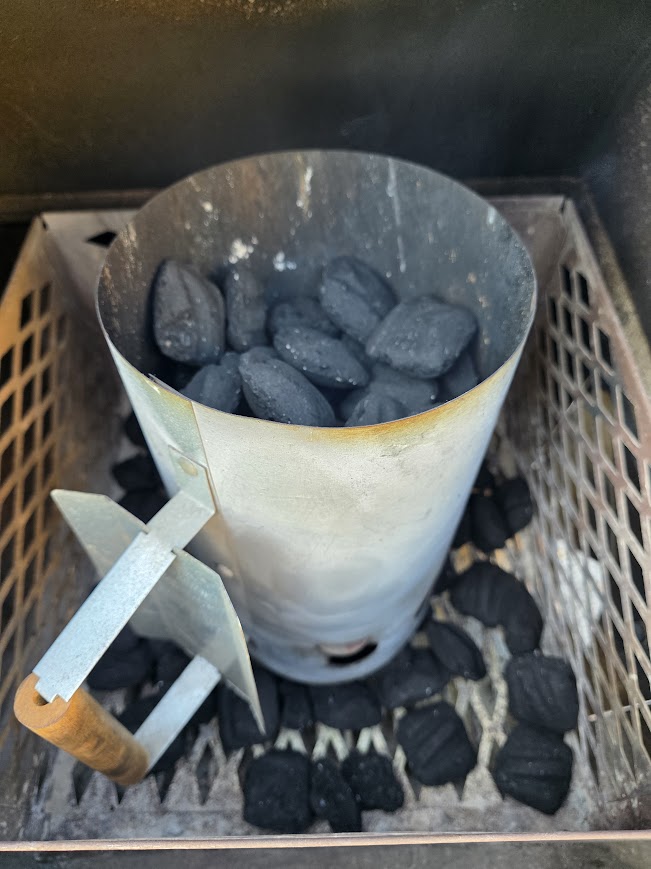
    Pellet smokers might use several pounds of pellets per cook depending on temperature and duration. Charcoal smokers may use a chimney or more per session, plus occasional wood chunks.

    Depending on local pricing and cooking style, total five-year fuel costs can end up in a similar range — often a few hundred dollars apart rather than thousands.

    For most backyard cooks, fuel cost differences matter less than consistency, convenience, and personal preference.

    Maintenance and Replacement Parts

    Long-term cost isn’t just about fuel. Maintenance and replacement parts can change the equation.

    Pellet smokers contain electronic components — controllers, augers, fans, and igniters. Over several years, some of these parts may need replacement depending on usage and build quality.

    Charcoal smokers are mechanically simpler. Aside from grates, gaskets, or occasional hardware replacements, there are fewer components that can fail.

    That simplicity can mean lower long-term repair costs — but it also means less automation and temperature control.

    So Which One Is More Affordable?

    Over five years, the total cost difference between pellet and charcoal smokers is often smaller than people expect. Pellet smokers typically cost more upfront and may carry slightly higher long-term maintenance risk. Charcoal smokers cost less to start and are mechanically simpler.

    But fuel costs over time are usually closer than the debate suggests. For many backyard cooks, the real decision comes down to convenience versus hands-on fire management — not dollars alone.

    If you’re weighing more than just cost, it helps to look at flavor, ease of use, and overall cooking style as well.

  • Why Your Smoker Temperature Swings (And How to Stabilize It)

    Why Your Smoker Temperature Swings (And How to Stabilize It)

    If your smoker temperature climbs 30 degrees, drops 20, then spikes again, you’re not alone. Temperature swings are one of the most common frustrations in backyard BBQ.

    The good news? Most swings aren’t caused by bad equipment. They’re caused by airflow, fuel management, and how heat actually moves inside your smoker. Once you understand those three things, stabilizing your temperature gets much easier.

    Airflow Controls Everything

    Temperature in a smoker isn’t controlled by the fuel alone — it’s controlled by oxygen. More oxygen feeds the fire and increases heat. Less oxygen slows combustion and lowers temperature.

    Small vent adjustments can create larger temperature changes than most people expect. Opening vents too quickly or too far often causes overshooting. Closing them abruptly can choke the fire and create a sudden drop.

    Stable temperature usually comes from small, gradual adjustments — not big corrections.

    Fuel Management Can Create Swings

    In charcoal smokers especially, how you add fuel makes a huge difference. Dumping a full chimney of lit coals into an already running fire almost guarantees a temperature spike.

    On the other hand, waiting too long to add fuel can cause a slow decline that’s hard to recover from without overcorrecting.

    The key is consistency. Adding smaller amounts of fuel before temperatures crash keeps the fire steady instead of reactive. Pellet smokers aren’t immune either — sudden feed cycles can create short-term spikes if the smoker is fighting wind or cold weather.

    Wind and Weather Change Everything

    Even a steady smoker can behave differently depending on conditions outside. Wind increases airflow through vents and can push temperatures higher than expected. Cold weather pulls heat away from the smoker body, making it work harder to maintain temperature.

    Direct sunlight can raise metal surface temperatures, while sudden gusts can create unexpected spikes.

    Many temperature swings aren’t mechanical problems — they’re environmental reactions.

    How to Stabilize Your Smoker Temperature

    Stabilizing your smoker isn’t about chasing every small fluctuation. It’s about preventing big swings before they happen.

    Make vent adjustments slowly and give them time to work before changing them again. Add smaller amounts of fuel consistently instead of waiting for large drops. Shield your smoker from strong wind if possible.

    Most importantly, measure temperature at grate level so you’re reacting to the number that actually matters. Relying only on the lid gauge can make swings look worse than they really are.

    Small Swings are Normal

    Every smoker moves. A perfectly flat temperature line isn’t realistic, especially with charcoal. Small swings of 10–20 degrees are completely normal and won’t ruin your cook.

    What matters most is avoiding dramatic spikes and crashes. When you understand airflow, fuel timing, and environmental impact, temperature control becomes predictable instead of stressful.

  • Why Your Smoker Temperature Doesn’t Match the Lid Gauge

    Why Your Smoker Temperature Doesn’t Match the Lid Gauge

    If you’ve ever looked at your smoker lid gauge and then checked your probe thermometer only to see a 20–50 degree difference, you’re not crazy. It happens all the time.

    The problem isn’t usually your meat, your fuel, or even your technique. It’s understanding where temperature is actually being measured — and why those numbers rarely match perfectly.

    Where the Lid Gauge Is Actually Measuring

    Most built-in lid gauges sit high on the dome of the smoker. That means they’re measuring the air temperature near the top — not the temperature where your food is sitting.

    Heat rises. So the top of the smoker is often hotter than grate level. On some setups, especially charcoal smokers, the difference can be 20–40 degrees or more.

    That doesn’t mean the lid gauge is broken. It just means it’s measuring a different zone.

    Why the Temperature Difference Can Be So Big

    Several things make the gap between lid temperature and grate temperature even wider.

    Airflow: Vents, wind, and how your smoker drafts can create hot spots and cool zones.

    Fuel placement: In charcoal smokers especially, heat radiates unevenly depending on where the coals are sitting.

    Water pans and drip trays: These absorb heat and can lower grate-level temperatures while the dome stays hotter.

    When you combine those factors, it’s easy to see why your lid might say 275°F while your probe at grate level reads 235°F.

    Which Temperature Should You Trust?

    If your goal is consistent results, the temperature at grate level matters more than the number on the lid. That’s where your food is actually cooking.

    Lid gauges are useful for trends — they tell you whether the smoker is climbing or dropping overall. But for accuracy, especially on longer cooks, grate-level readings are far more reliable.

    That’s why using a probe thermometer at food level makes such a difference during real cooks.

    What To Do About the Difference

    The fix isn’t replacing your lid gauge — it’s understanding how to use it.

    If you want the most accurate reading, place a probe thermometer at grate level, near the food. That gives you the number that actually matters.

    Over time, you’ll learn how your smoker behaves. You might notice that when the lid reads 275°F, your grate level sits closer to 240°F. Once you know that pattern, you can adjust confidently without second-guessing every fluctuation.

    Temperature swings are normal. Knowing where you’re measuring is what keeps you in control.