Tag: Smoke Tested BBQ

  • Why I Finally Upgraded My BBQ Gloves

    Why I Finally Upgraded My BBQ Gloves

    If you’ve spent much time around a smoker, you know that hot surfaces are part of the experience. Whether you’re moving grates, adjusting meat, handling a water pan, or pulling food from the smoker, a good pair of gloves can make the job much easier.

    I’ve always used BBQ gloves, but the pair I had been using for years left something to be desired. They provided decent protection, but they were bulky and oversized. Whenever I needed to handle food or make a quick adjustment around the smoker, I felt like I was sacrificing control for protection.

    I’ve also learned the hard way that hot equipment deserves respect. Years ago, I managed to burn myself while changing out a water pan on a smoker. It wasn’t a serious injury, but it was enough to remind me that protecting your hands is important when you’re working around hot metal and hot grease.

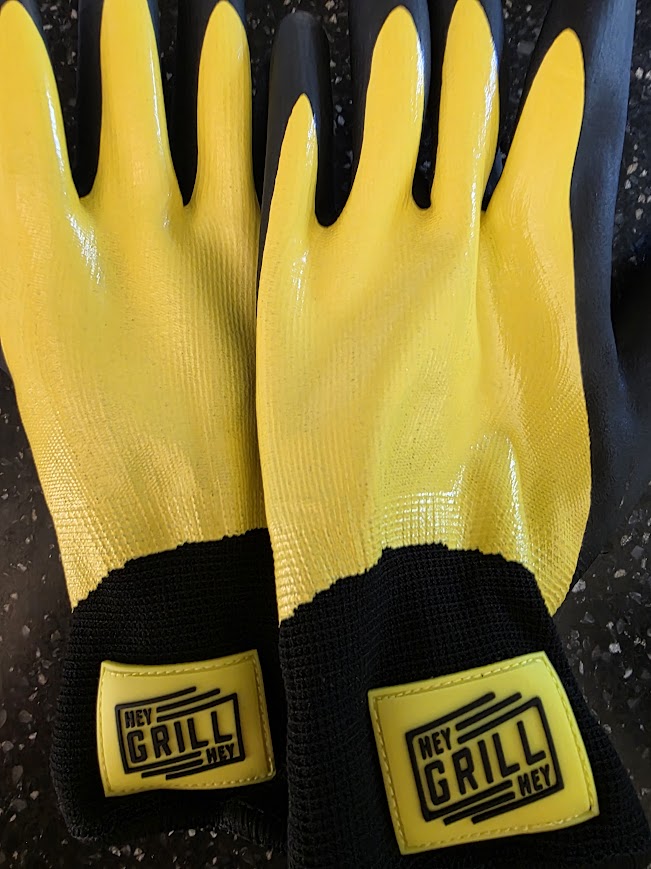
    When it came time to upgrade, I started doing what most backyard pitmasters do: reading reviews. After searching Google, reading customer feedback, and comparing several options on Amazon, one name kept appearing near the top of the list: the Hey Grill Hey Pitmaster Gloves.

    I decided to give them a try and see if they could earn a permanent spot beside The Beast.

    First Impressions

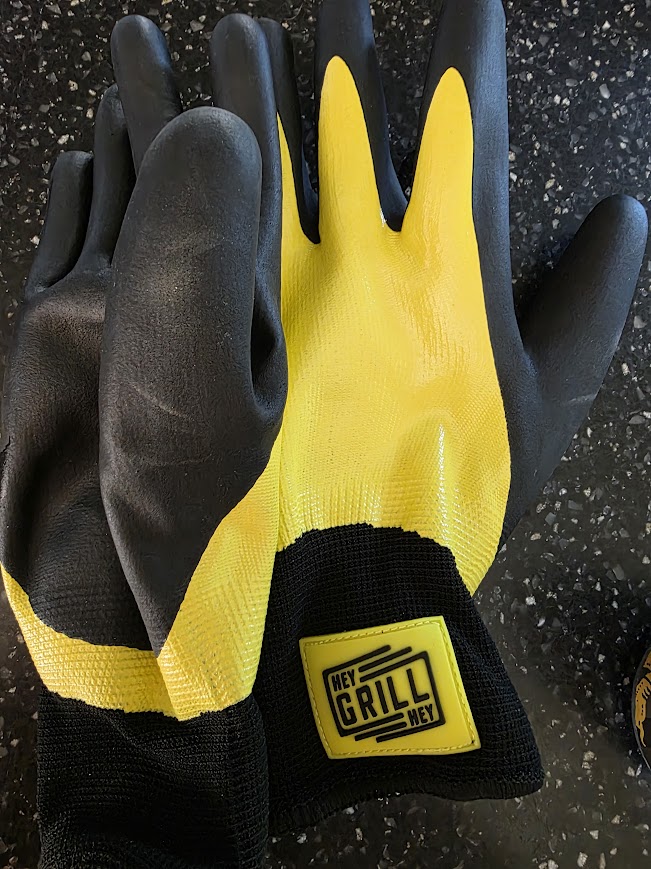
    The first thing I noticed when I pulled the Hey Grill Hey Pitmaster Gloves out of the package was the fit.

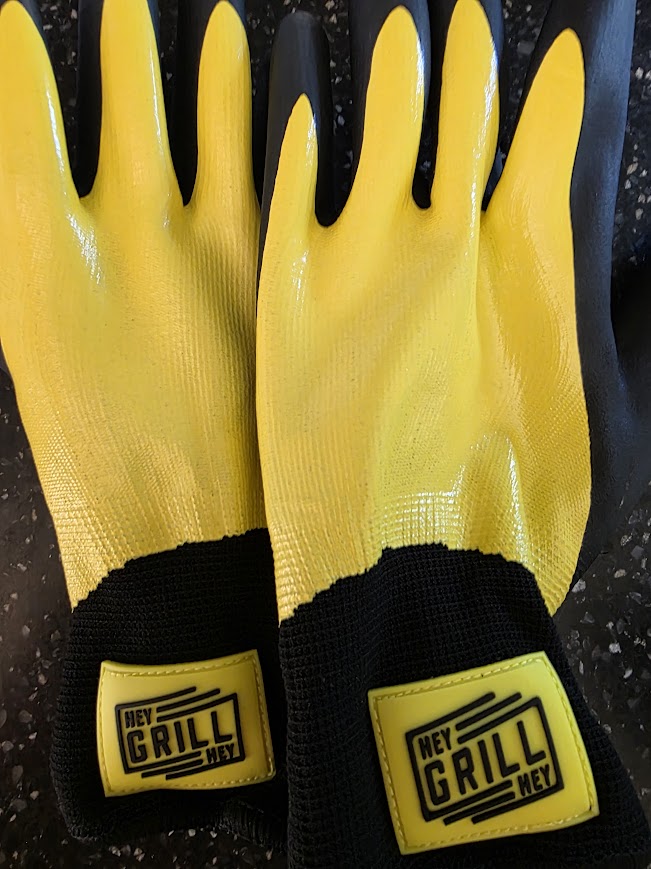
    Compared to the generic BBQ gloves I had been using, these were noticeably more form-fitting. My old gloves were oversized and bulky, which provided protection but sometimes made it difficult to handle food or work around the smoker with confidence.

    The Hey Grill Hey gloves felt different immediately. They fit closer to my hands, giving me much better control and a more natural feel. I could already tell they would be easier to use when handling meat, moving pans, or making adjustments around the smoker.

    The tradeoff became apparent right away as well. Because the gloves fit more snugly, they aren’t quite as quick to put on and remove as some larger gloves. That’s not a dealbreaker, but it was one of the first differences I noticed.

    Overall, my initial impression was positive. The gloves felt well made, comfortable, and designed for actual BBQ use rather than serving as a generic heat-resistant glove.
    Putting Them to the Test

    The real test came during a cook where I had both a rack of ribs and a beer can chicken on The Beast.

    When it was time to wrap the ribs, I immediately noticed the difference between these gloves and my old pair.

    With my previous gloves, I was always aware of the heat and never felt completely comfortable handling food directly. The bulky fit also made it harder to get a secure grip on larger cuts of meat.

    The Hey Grill Hey gloves changed that.

    I was able to reach in, grab the rack of ribs, carry it to the table, and prepare it for wrapping without feeling heat through the gloves. The grip felt secure, the gloves stayed comfortable, and I never felt like I was fighting the material to control what I was holding.

    That moment sold me on them.

    Throughout the cook, I also used them while handling the beer can chicken and working around the smoker. During this cook, the gloves protected my hands well while I handled the ribs, beer can chicken, and hot pan, and the snug fit made it easier to work confidently around the smoker.

    For me, that combination of grip, comfort, and heat resistance is exactly what I was hoping to gain by upgrading.

    What I Like

    After using the Hey Grill Hey Pitmaster Gloves during several cooks, three things stand out.

    Grip

    The biggest improvement over my old gloves is the grip. During my recent rib cook, I was able to grab a hot rack of ribs directly from the smoker and carry it to my table for wrapping without any issues. The gloves gave me a secure hold on the meat and made the entire process feel easier and more controlled.

    Comfort

    Despite fitting more snugly than my previous gloves, they were comfortable throughout the cook. The gloves remained flexible and never felt restrictive while working around the smoker.

    Heat Resistance

    This is where the gloves really impressed me. Not only was I able to handle hot ribs with confidence, but I also used them to move the pan holding my beer can chicken. At no point did I feel concerned about the heat coming through the gloves. The protection was excellent and gave me confidence when working around hot food and equipment.

    What I’d Change

    There isn’t much I would change, but the fit may not be for everyone.

    The gloves fit much closer to the hand than the generic BBQ gloves I had been using. As a result, they take slightly longer to put on and remove.

    For me, that’s a very minor tradeoff. The improved control, grip, and dexterity more than make up for the extra few seconds it takes to get them on.

    In fact, I think the snug fit is one of the reasons they perform so well.

    Final Thoughts

    After several cooks with the Hey Grill Hey Pitmaster Gloves, I can confidently say they were worth the investment.

    The improved grip, comfort, and heat protection have made working around The Beast easier and safer. Whether I’m handling ribs, moving a pan of beer can chicken, or pulling food from the smoker, these gloves give me more confidence than the generic gloves I used previously.

    The tighter fit may not be for everyone, but for me, the added control is absolutely worth the minor inconvenience.

    If a friend asked whether these gloves are worth the money, my answer would be yes. The closer fit and better grip are a noticeable improvement over the bulky pair I used before, and these have quickly become one of the tools I reach for whenever I fire up The Beast.

    If you want to take a closer look, you can [see the Hey Grill Hey Pitmaster Gloves on Amazon].

    Disclosure: This article contains affiliate links. As an Amazon Associate I earn from qualifying purchases.

  • Does Beer Can Chicken Actually Work? My Offset Smoker Test

    Does Beer Can Chicken Actually Work? My Offset Smoker Test

    Beer can chicken has been around for years, and if you’ve spent any time around backyard BBQ enthusiasts, you’ve probably heard strong opinions about it. Some people swear the beer steams the chicken from the inside and keeps it moist. Others insist it’s nothing more than a gimmick.

    I’ve made beer can chicken before, and one thing I remembered was how juicy and flavorful it turned out. With a free Saturday, a 4.5-pound chicken, and a fresh bag of Jealous Devil briquettes, I decided it was time to try it again on The Beast.

    This cook also gave me a chance to put my new Bluetooth thermometer through its paces. Between testing new gear, trying a different beer, and seeing whether beer can chicken still lived up to my memory, it seemed like the perfect excuse to fire up the smoker.

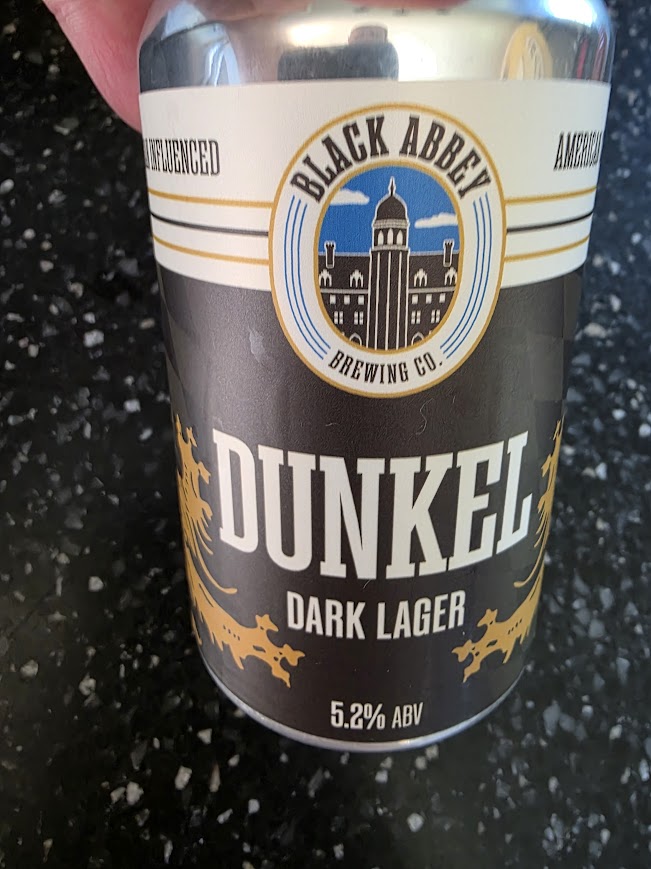
    For this cook, I used a Black Abbey Dunkel Dark Lager, Central BBQ Rub from Memphis, hickory wood chunks, and my Oklahoma Joe offset smoker. The goal was simple: cook a juicy chicken, see how the beer can method performed, and answer the question that keeps coming up whenever beer can chicken is mentioned:

    Does it actually work?

    The Setup

    For this cook, I kept things simple.

    I started with a 4.5-pound whole chicken and seasoned it generously with Central BBQ Rub from the famous Memphis barbecue restaurant. The rub provides a nice balance of sweet, savory, and smoky flavors that work well with poultry.

    For the beer, I chose a Black Abbey Dunkel Dark Lager. Some beer can chicken recipes call for lighter beers, but I wanted something with a little more character. Whether that would actually make a difference in the finished product was part of the experiment.

    To fuel The Beast, I used Jealous Devil briquettes along with hickory wood chunks for smoke flavor. I’ve had good luck with Jealous Devil on longer cooks because it burns consistently and produces less ash than many other briquettes I’ve tried.

    My target cooking temperature was 300–315°F. When smoking chicken, I generally prefer running a little hotter than traditional low-and-slow barbecue temperatures. Higher temperatures help render the skin and prevent the rubbery texture that can sometimes happen when poultry is cooked too low.

    With the chicken seasoned, the beer can loaded, and The Beast running at temperature, it was time to see whether beer can chicken still deserved its reputation.

    What You’ll Need

    For this cook, I kept things simple:

    • 1 whole chicken (about 4.5 pounds)
    • 1 can of Black Abbey Dunkel Dark Lager
    • Central BBQ Rub
    • Jealous Devil Briquettes
    • Hickory wood chunks
    • Bluetooth meat thermometer

    I opened the beer and poured out roughly half the can before placing the chicken on it. Some pitmasters leave the can alone, while others add additional ingredients. I sprinkled a little Central BBQ Rub into the beer before placing it in the chicken.

    The bird was coated generously with Central BBQ Rub, making sure to get seasoning on all sides before heading out to the smoker.

    At this point, everything was ready for The Beast.

    Smoker Setup

    I fired up a chimney starter filled with Jealous Devil briquettes and got The Beast running before adding the chicken. Once the coals were ready, I spread them in the firebox and added a few hickory wood chunks for smoke.

    My target temperature for this cook was between 300°F and 315°F. Chicken tends to benefit from slightly higher temperatures than traditional low-and-slow BBQ, especially if you’re trying to avoid rubbery skin.

    The Beast settled into that range without much trouble and stayed there for most of the cook. Once the smoker was running clean and producing thin blue smoke, it was time to put the chicken on.

    The Cook

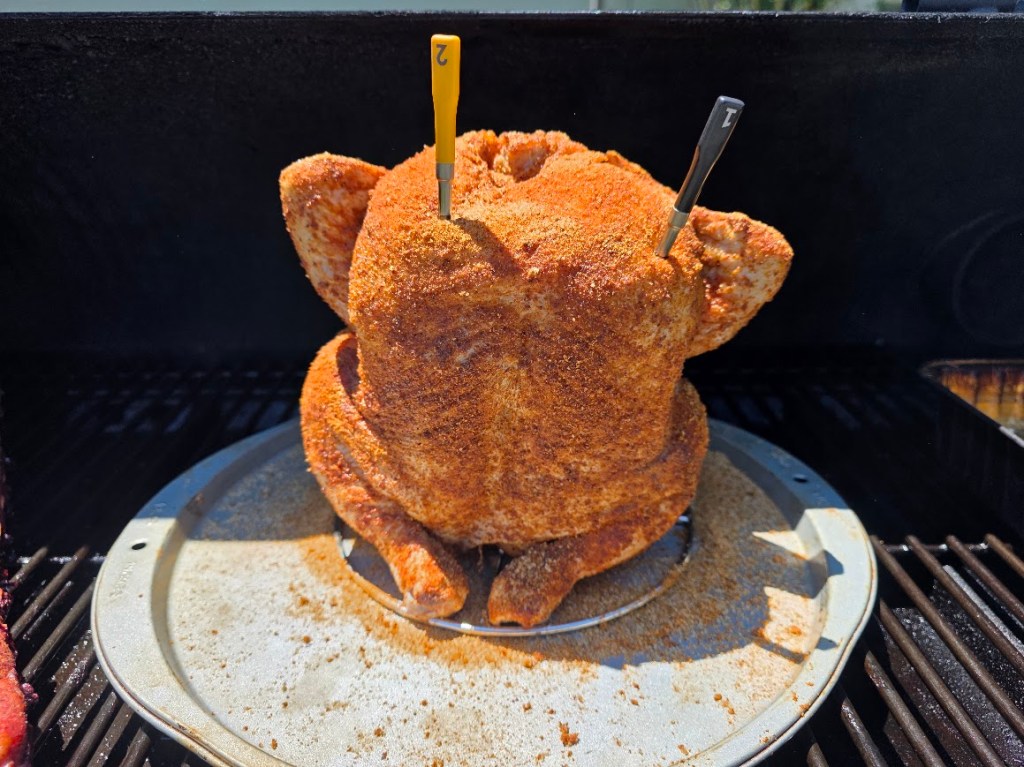
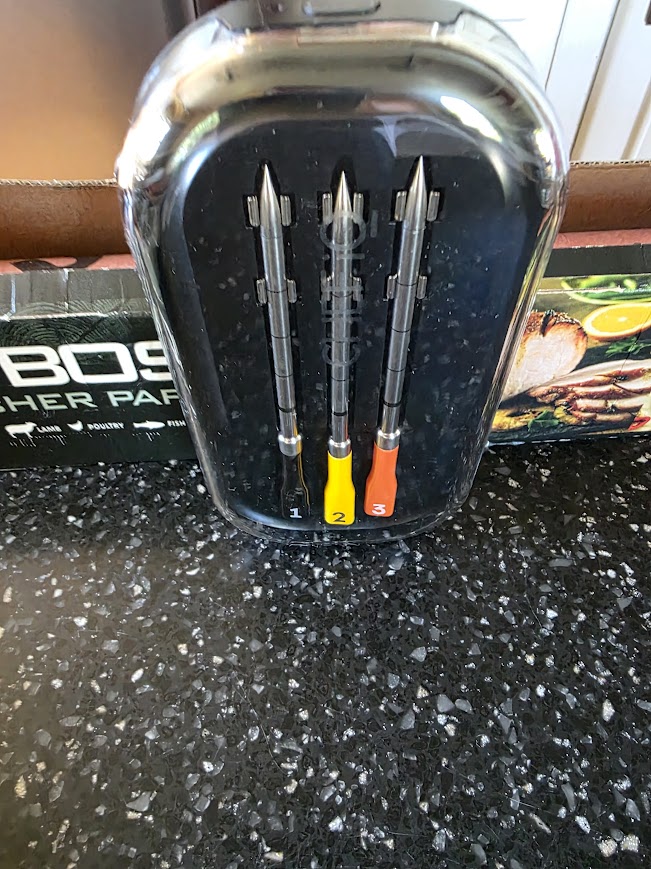
    Once the smoker was stabilized, I inserted two probes from my Bluetooth thermometer into the chicken breast and placed the bird on The Beast.

    One of the goals of this cook was to test the new thermometer, and it performed flawlessly throughout the day. I even checked the readings with a second thermometer at the end of the cook just to verify accuracy. The readings were right on target.

    The chicken went onto the smoker around noon. During the cook, I added a few more Jealous Devil briquettes and a couple additional hickory chunks to maintain heat and smoke.

    One thing that helped was the weather. There wasn’t much wind, which allowed The Beast to run steadily in the 300°F to 315°F range for most of the afternoon. Anyone who cooks on an offset smoker knows that windy days can make temperature management much more challenging, so it was nice to have a relatively calm day for this cook.

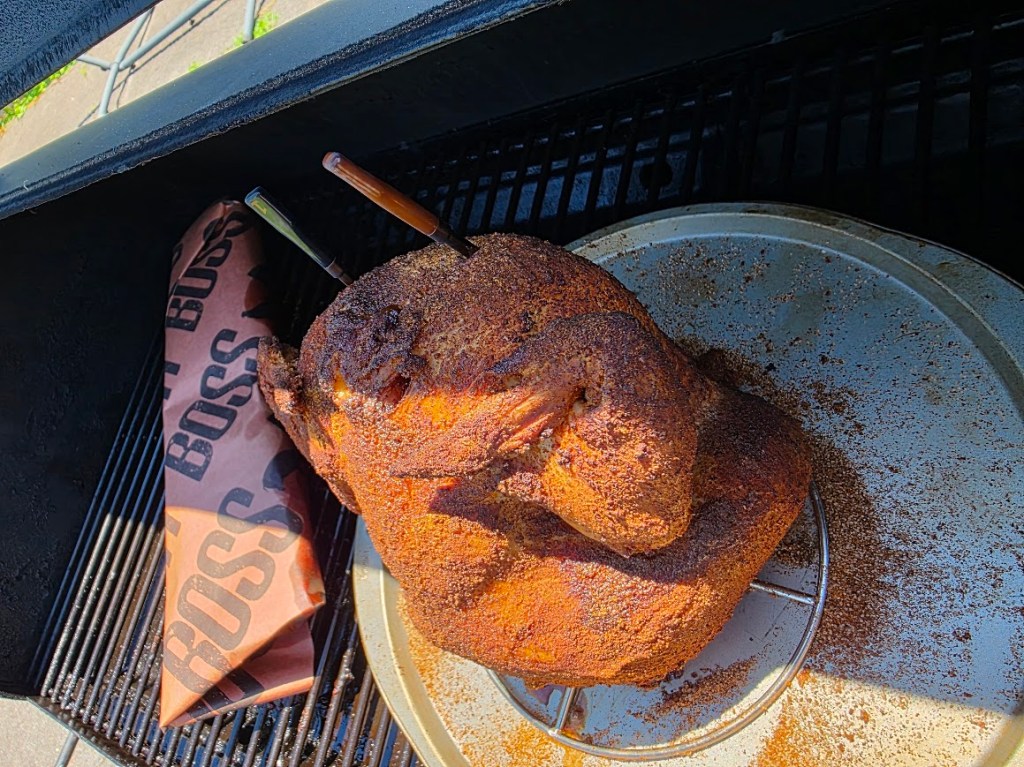
    After about 2¼ to 2½ hours, the chicken reached my target temperature of 165°F in the breast meat and was ready to come off the smoker.

    When it came time to remove the chicken from the smoker, I used a pair of heat-resistant grill gloves to safely lift the bird and beer can off the cooking grate. The pan, beer can, and chicken were all extremely hot at this point, so proper protection is a must.

    The Results

    When it was finally time to pull the chicken from the smoker, the first thing I noticed was how good it looked. The skin had developed a nice color from the hickory smoke, and the bird cooked evenly from top to bottom.

    As soon as I started slicing into the breast meat, juice began running onto the cutting board. That’s always a good sign.

    The hickory smoke came through nicely without overpowering the chicken. It added flavor and depth while still allowing the seasoning and natural flavor of the chicken to stand out.

    The family reaction was immediate: juicy and super tasty.

    The only area where I think there’s room for improvement is the skin. While it was good, it wasn’t quite as crispy as I would have liked. Running The Beast between 300°F and 315°F produced excellent meat, but next time I may push the temperature a little higher to see if I can get the skin closer to perfect.

    As for the beer itself, I’m still not convinced it adds a noticeable beer flavor to the meat. I used a Black Abbey Dunkel Dark Lager and even added some rub to the can, but I couldn’t specifically taste the beer in the finished product.

    What I can say is that the chicken turned out incredibly juicy, and the overall method delivered exactly the kind of result I was hoping for.

    One thing I really liked about this cook was how quickly it came together. While pulled pork remains one of my favorite beginner BBQ cooks, beer can chicken can be cooked in just a few hours and still deliver excellent results.

    Final Thoughts

    After smoking beer can chicken on The Beast, I can confidently say I’ll be making it again.

    The chicken turned out incredibly juicy, with visible moisture running from the breast meat when I sliced into it. The hickory smoke came through nicely without overpowering the flavor of the chicken, and the family gave it rave reviews.

    What about the beer?

    To be honest, I’m still not convinced the beer itself added much flavor. I used a Black Abbey Dunkel Dark Lager and even added some Central BBQ Rub to the can, but I couldn’t identify any beer flavor in the finished product.

    What I can say is that the overall cooking method works. The bird cooked evenly, stayed juicy, and produced excellent results.

    The only thing I would change next time is the cooking temperature. Running The Beast around 300–315°F produced great chicken, but the skin wasn’t quite as crispy as I would have liked. Next time, I’ll push the temperature a little higher to see if I can improve the skin while keeping the meat just as juicy.

    Whether the beer is doing the work or not, the end result was delicious. That’s enough reason for me to keep beer can chicken in the rotation.

    If you’re looking for another beginner-friendly chicken cook, check out my Smoked Chicken Thighs recipe. It’s one of the easiest ways to produce juicy chicken on an offset smoker.