
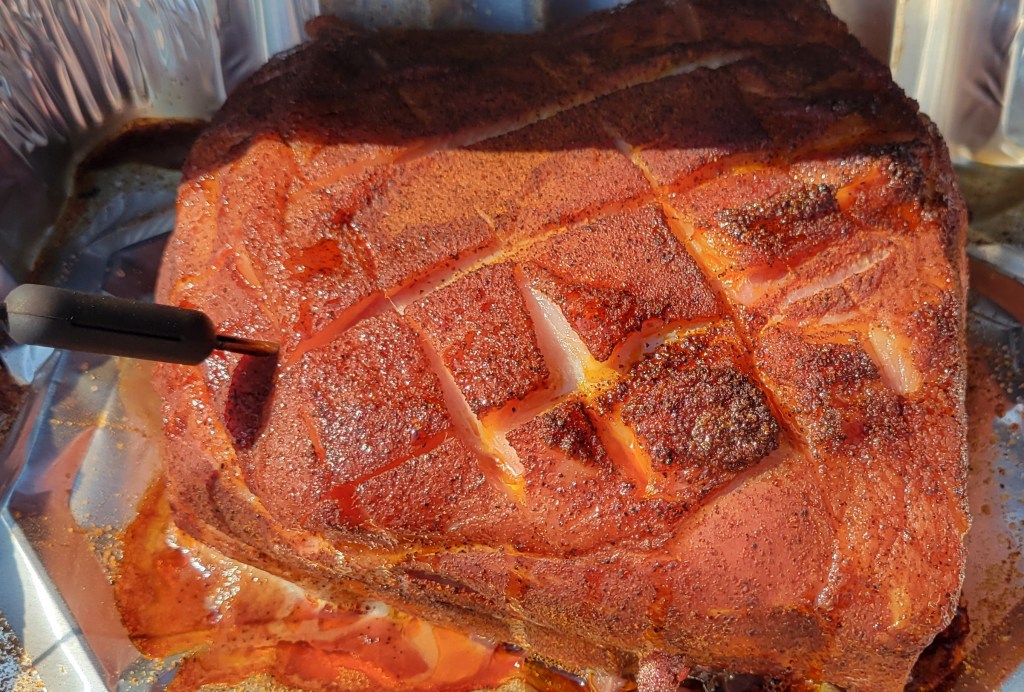
Pulled pork might be one of the most forgiving meats to learn on an offset smoker. It takes time, but unlike brisket, small mistakes usually won’t ruin the cook. If you’re learning fire management, smoke control, and patience, pork shoulder is a good place to start.
Ingredients
- 1 pork shoulder / Boston butt (6–9 lbs works well)
- Yellow mustard (binder, optional)
- BBQ rub of choice
- Apple juice or apple cider vinegar (spritz, optional)
- Aluminum foil or butcher paper
- BBQ sauce (optional for serving)
Smoker Setup
For pulled pork on The Beast, I usually run between 250°F and 275°F. Purists love 225°F, but I’d rather finish before tomorrow and still get good bark.
Fuel setup:
- Charcoal base (lump or briquettes both work)
- Wood splits preferred for steadier heat
- Pecan or hickory for smoke flavor
I’ll occasionally spritz with water or apple cider vinegar if the bark starts looking dry.
One thing beginners learn quickly:
Temperature matters more than time.
This is where a digital thermometer earns its money.
The rest of the cook is simple:
Season → Smoke → Wrap → Rest → Pull
Pulled pork rewards patience more than perfection.
Step 1: Prep the Pork Shoulder
Pat the pork shoulder dry if needed.
Lightly coat the outside with yellow mustard. The mustard acts as a binder and helps seasoning stick. Don’t worry — you won’t taste much mustard after a long cook.
Apply your BBQ rub generously on all sides.
I used to mix my own sweeter rub with a brown sugar base, but these days there are enough good commercial rubs around that I’ll rotate and try different ones.
A few BBQ rubs I’ve liked for pulled pork:
Meat Church Holy Gospel → slightly sweet with enough savory flavor to work well on pork
Heath Riles Sweet BBQ Rub → balanced and versatile; good bark development
Killer Hogs The BBQ Rub → one of my go-to options when I want a sweeter profile on pork
One benefit of pork shoulder:
It’s forgiving.
You don’t have to overthink seasoning nearly as much as brisket.
Let the pork sit while the smoker comes to temperature.
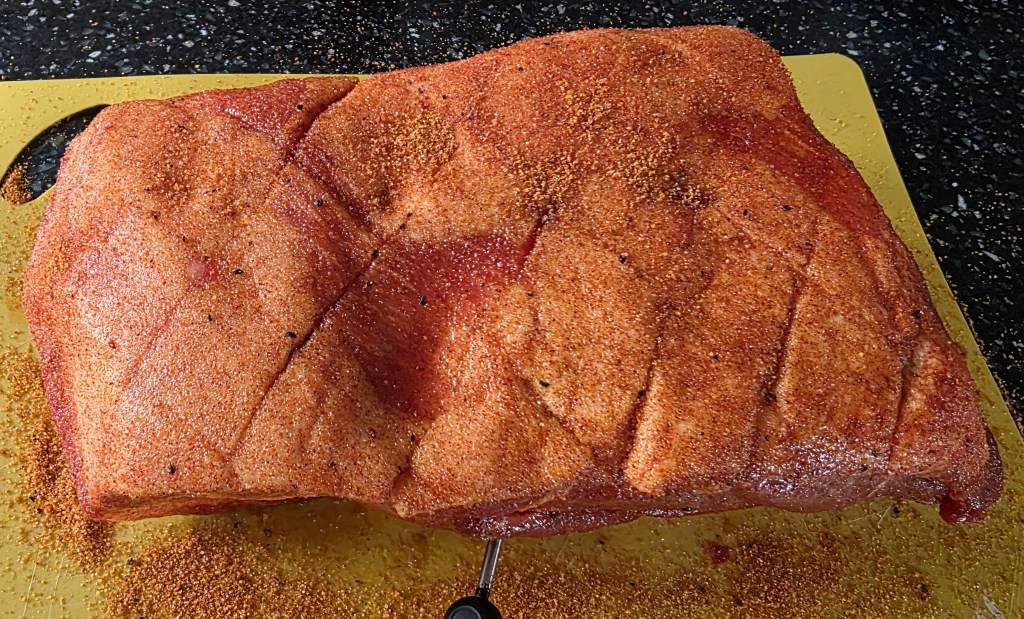
Step 2: Smoke the Pork Shoulder
Place the pork shoulder on the smoker with the fat cap facing up.
I’ll usually score the fat cap in a diamond pattern beforehand. Some people swear it helps smoke and seasoning work deeper into the bark, and at minimum it helps create more surface area.
Cook around:
250°F–275°F
Expect roughly:
45 minutes to 1 hour per pound
A typical 7–8 lb shoulder can easily turn into an all-day cook.
A few things I watch during the cook:
- Smoke quality (thin smoke beats heavy white smoke)
- Bark development
- Moisture on the outside of the pork
- Hot spots in the smoker
On an offset, one side sometimes cooks differently than another.
If I think part of the pork is drying out faster, I’ll occasionally rotate the shoulder.
I may spritz with water or apple cider vinegar if the bark starts looking dry.
At around:
167°F–175°F internal temperature
Wrap tightly in foil to push through the stall and help retain moisture.
Step 3: Rest, Pull, and Finish
Once the pork shoulder reaches around 203°F internal temperature, pull it from the smoker and let it rest for about an hour.
Skipping the rest is one of the easiest mistakes beginners make.
The juices need time to redistribute.
After resting:
- Shred or pull the pork
- Mix bark pieces throughout for texture and flavor
- Add a small amount of reserved juice back in (not all of it)
- Sprinkle in a touch more BBQ rub if needed
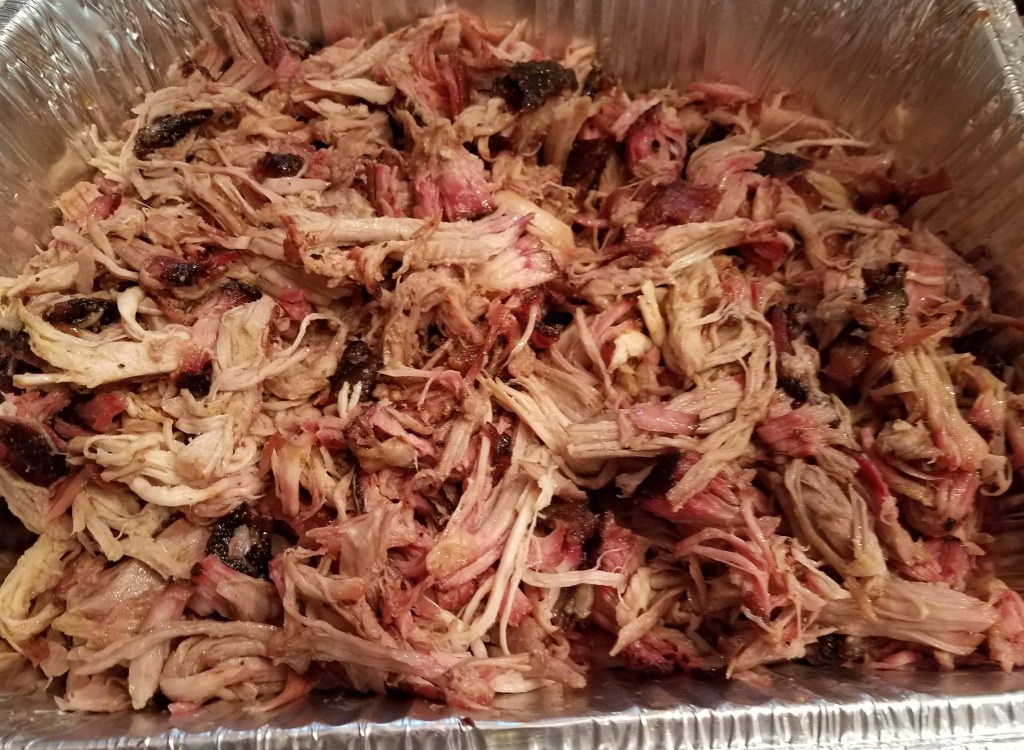
The goal isn’t wet pulled pork.
The goal is moist pork that still tastes like smoke and bark.
One thing I usually avoid:
Adding sauce immediately.
I’d rather let people sauce their own so the smoked pork flavor still comes through.
Common Pulled Pork Mistakes Beginners Make
❌ Pulling the pork too early
203°F matters more than impatience. Need a reference? Check out my guide on target temperatures for pork, chicken, and brisket.
❌ Not using a digital thermometer
Guessing costs more cooks than seasoning mistakes.
❌ Skipping the rest period
Hot pork isn’t ready pork.
❌ Chasing smoker temperatures every 10 minutes
Offset cooking rewards patience.
Final Thoughts
Pulled pork is one of the best meats to learn on an offset smoker.
It teaches:
- Fire management
- Patience
- Smoke control
- Temperature monitoring
…and unlike brisket, small mistakes usually won’t ruin the cook.
One thing I like about pulled pork:
The leftovers rarely go to waste.
It works on:
- BBQ baked potatoes
- Sandwiches
- Nachos
I’ll also vacuum seal or freeze portions in zip bags, and it reheats surprisingly well later.
A long cook turns into several meals.
That’s hard to beat.
 Smoke Tested BBQ