
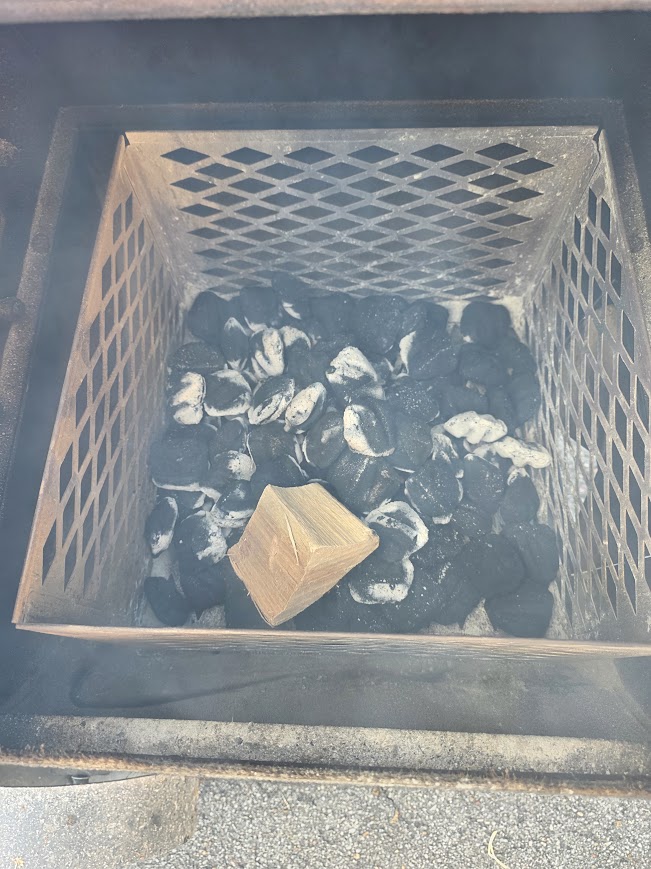
There are few things more frustrating than adding wood to an offset smoker and watching it smolder instead of catching fire.
I have had this happen with both wood chunks and splits on my Oklahoma Joe Longhorn Reverse Flow, which I call The Beast. In my case, the problem usually was not bad wood. I had added more wood than the existing charcoal bed could support.
The charcoal had already weakened, the fresh wood could not ignite cleanly, and my smoker temperature started heading in the wrong direction.
When that happens, I open the airflow, give the fire a chance to respond, and relight about half a chimney of charcoal when the coal bed is too weak to recover. It usually takes my smoker another 15 to 30 minutes to stabilize.
Here is how I recognize the problem, recover the fire, and try to prevent it from happening again.
Why Wood Smolders Instead of Catching Fire
Wood needs enough heat and oxygen to ignite.
In an offset smoker, the existing coal bed provides much of the heat needed to light the next chunk or split. When those coals have faded too far, the new wood may smoke and smolder without developing a steady flame.
That was the mistake I made.
My original fire was mostly charcoal. Before I added more wood, the charcoal looked darker than it should have. It was still burning, but it was not giving off enough heat to support the amount of wood I added.
The wood smoldered for a little while and then failed to catch.
Adding fuel also changes how air moves through the firebox. Piling too much wood onto a small coal bed can crowd the fire and restrict airflow around the burning fuel. Oklahoma Joe’s recommends arranging added wood or charcoal so the existing fire can continue receiving air.
In simple terms, I had asked a weak fire to do too much.
The Warning Sign I Missed
The first warning was the appearance of the charcoal.
A healthy charcoal bed usually has visible heat, glowing areas, and enough energy to ignite the next piece of fuel. Mine had become noticeably dark.
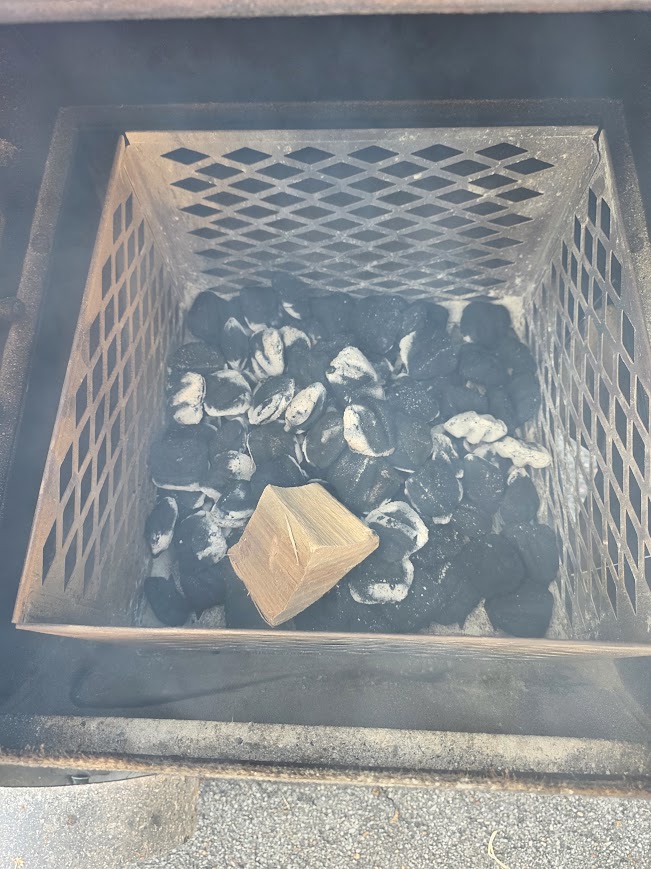
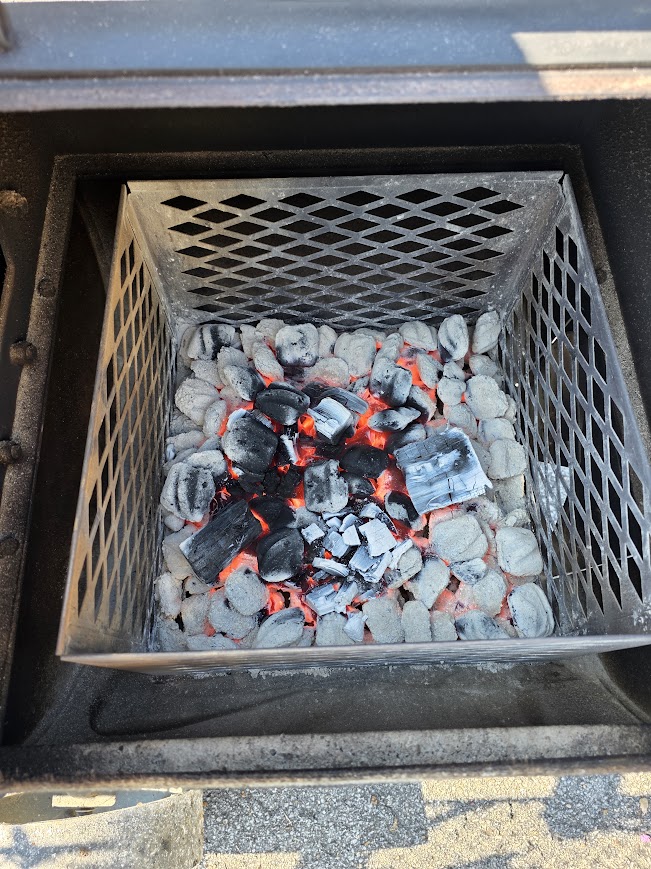
The second warning was the smoker temperature beginning to dip. A small amount of movement is normal, but a steady decline can point to a weakening fire. I cover the other common causes in my guide to why smoker temperatures fluctuate.
A small temperature drop does not always mean something is wrong. Offset temperatures naturally move around during a cook. But when the temperature is falling and the coal bed also looks weak, I now take that combination seriously.
That is the point when I should have strengthened the fire rather than placing more wood on top of it.
What Happened After I Added Too Much Wood
The added wood produced some smoke but never developed a reliable flame.
This has happened to me with chunks as well as splits, so I do not think the shape of the wood was the only issue. The bigger problem was that the fire underneath it was not hot enough.
A fire can fall into a smoldering state when it lacks sufficient oxygen or heat to maintain stronger combustion.
In my case, the symptoms were:
- Dark, weakening charcoal
- A falling smoker temperature
- Wood that smoldered briefly
- No steady flame on the new wood
- A fire that did not recover on its own
At that point, continuing to stack more wood into the firebox would only have made the problem worse.
How I Recover a Weak Offset-Smoker Fire
My first move is to increase airflow.
I open the vents fully and open the firebox so the existing coals have access to more oxygen. More airflow can increase the intensity of a charcoal fire, while restricting the vents reduces the oxygen available to it.
I stay beside the smoker while doing this. An open firebox can change quickly once the coals begin responding.
Sometimes the remaining coal bed comes back to life with additional airflow. When it is too weak, I light more charcoal.
For the situation described here, I relit approximately half a chimney of charcoal in my chimney starter. I normally use Jealous Devil briquettes, which I discuss in more detail in the charcoal I use in my offset smoker. Once the charcoal was properly lit, I added it to the firebox to rebuild the hot coal bed.
My recovery process looked like this:
- I stopped adding wood.
- I opened the vents fully.
- I opened the firebox to increase airflow.
- I lit about half a chimney of charcoal.
- I added the lit charcoal to the weak fire.
- I waited for the fire and smoker temperature to stabilize before making another adjustment.
On The Beast, that recovery took approximately 15 to 30 minutes.
That delay is inconvenient, but trying to rush the process by piling in more fuel can leave you with an even larger smoky mess.
Should You Remove the Wood That Is Smoldering?
This depends on what the wood and fire are doing.
A brief period of heavier smoke immediately after adding wood does not always mean the fire is failing. Fresh fuel can take time to heat and ignite. Oklahoma Joe’s notes that wood may need roughly 10 to 15 minutes after being added before it is burning properly enough to begin cooking over it.
That does not mean I ignore a dying fire for 15 minutes regardless of what I see.
I look at the whole situation:
- Is the charcoal still visibly hot?
- Is the wood beginning to flame?
- Is the smoker temperature recovering or continuing to fall?
- Is airflow moving freely around the fuel?
- Is the smoke starting to thin?
When the wood is beginning to catch and the temperature is responding, I give it time.
When the wood continues to smolder, the temperature keeps falling, and the charcoal bed is dark, I treat that as a weak-fire problem.
During my recovery, I focus on rebuilding the coal bed instead of repeatedly stirring and rearranging everything in the firebox.
Thick Smoke Does Not Always Mean You Should Panic
The first time I saw thick white smoke rolling from the smoker, I panicked.
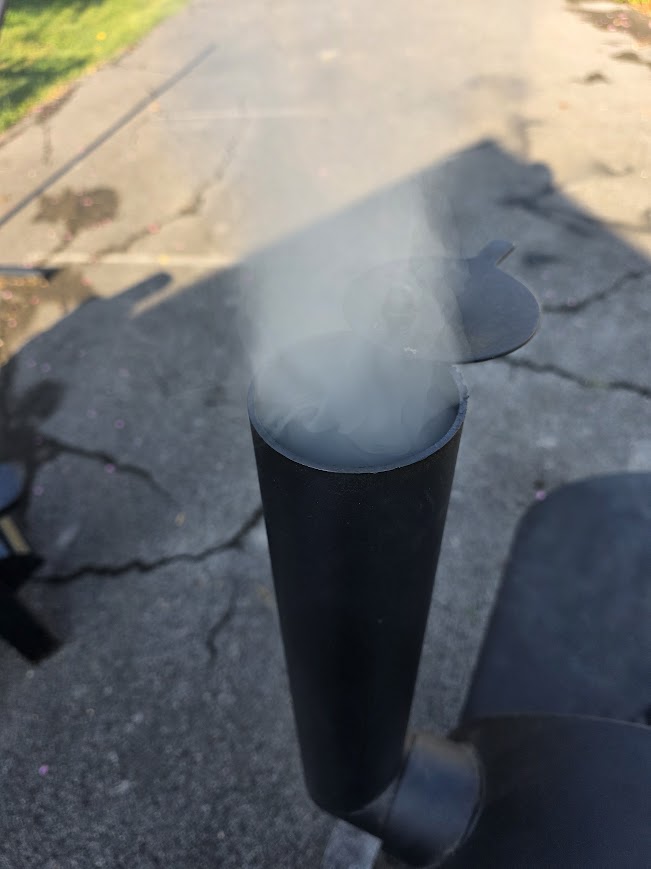
I kept opening the firebox, stirring the fuel, and trying to fix the fire immediately. With experience, I learned that smoke can temporarily become heavier after adding fresh fuel and then clear as the wood heats and catches.
The important part is whether the fire is moving toward clean combustion or continuing to struggle.
I now give a newly added piece of wood a reasonable chance to catch before I start making several changes at once.
Constantly opening, stirring, closing, and adjusting the fire can make it harder to tell which change actually helped.
However, waiting does not mean ignoring a clear failure. If the pit temperature continues dropping and the wood never catches, I step in and strengthen the coal bed.
How I Try to Prevent the Fire From Dying
My biggest lesson was to add fuel before the fire becomes too weak.
I now check both the smoker temperature and the condition of the coal bed before adding wood.
I want the existing fire to be hot enough to ignite the next piece of fuel. I also avoid adding more wood than the fire can support at one time.
Before adding a chunk or split, I look for:
- A coal bed that still appears hot
- Some visible glowing charcoal
- A pit temperature that has not fallen too far
- Enough open space for air to move around the fuel
- Room to place the wood near the heat instead of burying the fire
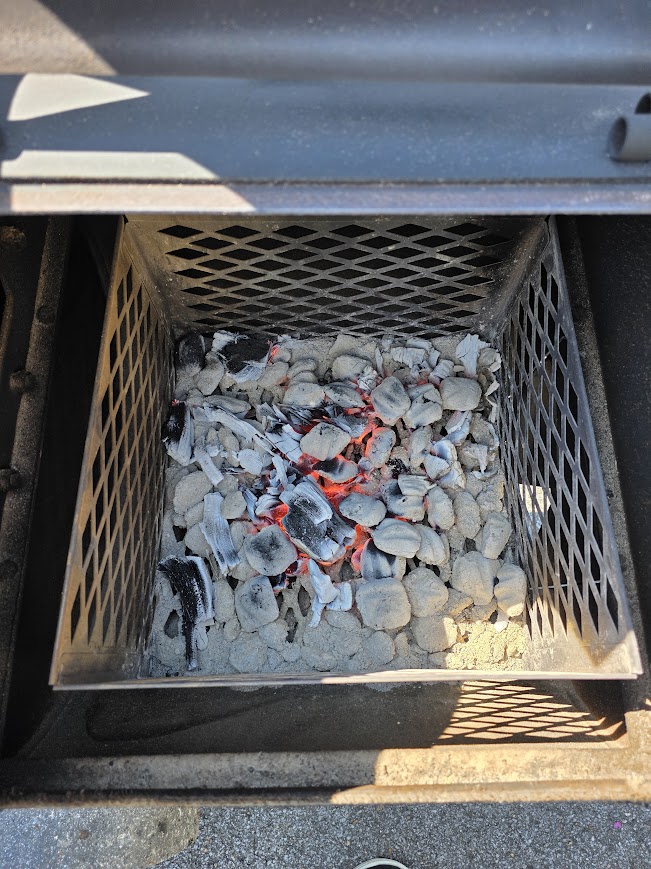
Oklahoma Joe’s describes the Longhorn Reverse Flow as being designed to burn charcoal along with hardwood splits or chunks. The charcoal and wood need to work together rather than the new wood smothering what remains of the fire.
The goal is not to wait until the smoker is already in trouble. This kind of hands-on fire management is one of the main differences between an offset and a pellet smoker. I explain that tradeoff in my comparison of pellet smokers and charcoal-and-wood smokers. It is easier to maintain a healthy fire than to rebuild a dying one in the middle of a cook.
Do You Always Need More Charcoal?
No.
Sometimes opening the airflow and giving the existing fuel a few minutes is enough. I relight charcoal when the remaining coal bed is clearly too weak to ignite the wood or bring the smoker back to temperature.
Signs I may need more lit charcoal include:
- Very little visible heat in the coal bed
- Wood that keeps smoldering without catching
- A temperature that continues falling despite increased airflow
- No meaningful improvement after allowing the fire time to respond
Relighting half a chimney worked for me in this situation. That amount should not be treated as a universal rule. A smaller smoker, a larger smoker, different weather, or a different stage of the cook may require another approach.
Final Thoughts
When wood would not catch in my offset smoker, the real problem started before I added it.
The charcoal bed had become too weak, and I added more wood than the existing fire could ignite. The wood smoldered, the temperature continued falling, and I eventually had to rebuild the fire with about half a chimney of freshly lit charcoal.
Opening the airflow helped, but the fire still needed time. My smoker took another 15 to 30 minutes to stabilize.
What I do differently now is simple: I watch the coal bed and the pit temperature before adding more fuel. I try to add wood while the fire is still healthy instead of waiting until it is already fading.
Offset smokers require patience. Sometimes the best fire-management move is to wait and let fresh wood catch. Other times, the coal bed is telling you that it needs help.
Learning the difference took me a few smoky mistakes beside The Beast.

